
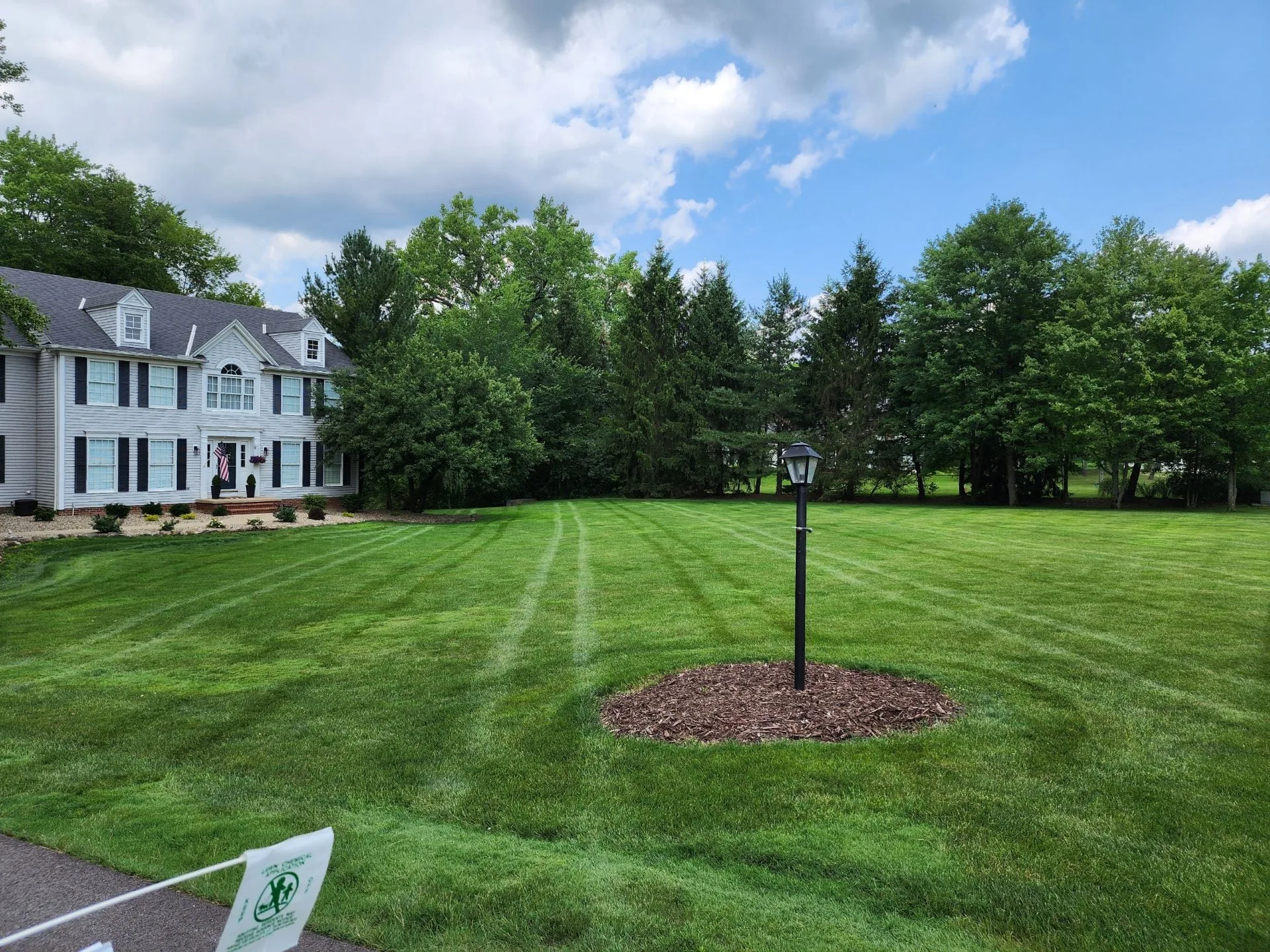
A lawn can look tired for months before it finally goes bare, and by then the fix usually takes more work. The good news is that the most common lawn aeration signs show up early, if you know what to look for. In northeast Ohio, packed soil, patchy grass, and puddling after a spring storm are usually your yard’s way of asking for air, seed, or both.
1. Your soil feels hard and compacted
If your lawn feels more like a parking area than a soft patch of grass, pay attention. Compaction simply means the soil has been pressed so tightly that air, water, and nutrients have a hard time moving through it. When that happens, roots stay shallow, grass struggles, and the whole lawn gets less resilient.
You can often feel this just by walking across the yard. The ground seems firm in a bad way, not solid and healthy. Digging a small hole feels harder than it should, and even basic yard work turns into a fight with the soil.
Try the screwdriver test
Here’s the quick check: wait until the soil is moist, then push a screwdriver into the ground. If it slides in fairly easily, your soil is probably in decent shape. If it resists right away and takes real force, compaction is likely part of the problem.
It’s simple, but it tells you a lot. Try it in a few places, especially where the lawn looks weak. One tough spot may be isolated. Several tough spots usually point to a lawn-wide issue.
Why compaction leads to overseeding
Compacted soil makes it hard for roots to spread and hard for existing grass to stay thick. Over time, the lawn thins out because shallow-rooted grass has a tougher time with heat, dry spells, and traffic.
That’s why aeration and overseeding pair so well. Aeration loosens the lawn up by pulling small plugs of soil, and overseeding helps new grass move into thin areas while the soil is more open and welcoming.
2. Water puddles, runs off, or just sits on top
A healthy lawn should absorb water, not reject it. If rain or sprinkler water lingers on the surface, forms puddles, or runs off before soaking in, your soil is waving a red flag.
This is one of the clearest lawn aeration signs because it shows that water can’t move down where roots need it. Instead of feeding the lawn, moisture stays on top and eventually evaporates or drains away.
What this looks like after a northeast ohio rain
Picture the morning after a steady April rain in northeast Ohio. You step outside, and the low spots still have standing water while the rest of the yard looks slick and muddy. Even a gentle slope may send water toward the sidewalk instead of into the ground.
That’s not just annoying. It usually means the soil surface is too tight to let water pass through normally.
Why aeration helps drainage
Aeration opens channels in the soil so water can move downward instead of collecting on top. Those small holes improve drainage, but just as importantly, they help moisture reach deeper roots.
That shift matters. A lawn that absorbs water properly tends to stay greener, hold up better between waterings, and waste less of every rainfall.
3. Your grass is thinning, patchy, or full of bare spots
Thin turf is often your lawn’s way of telling you the growing conditions below the surface are off. Grass that once filled in nicely starts looking sparse. Small weak areas spread. Bare spots hang around longer than they should.
At that point, mowing higher or watering more won’t fully solve it. If the soil is compacted, new growth has a hard time getting established. Overseeding becomes especially helpful here because fresh seed can fill in the gaps after aeration improves seed-to-soil contact.
Thin grass vs. totally dead spots
Thin grass can often bounce back well with aeration and seed. Totally dead spots need a closer look. Shade, pet damage, disease, or poor soil may be part of the picture.
Here’s the thing: seed works best when the site can actually support grass. If one patch never improves while the rest of the lawn does, that area may need more than just seed.
4. Your lawn dries out fast, even when you water it
Few things are more frustrating than watering your lawn and watching it look thirsty again a day later. If that keeps happening, the problem may not be how much water you’re applying. It may be where that water is, and isn’t, going.
Compacted soil often keeps moisture near the surface. That means the top layer gets wet, then dries out quickly, especially during an August stretch in northeast Ohio when the sun finally shows up and the lawn starts stressing fast.
Shallow roots are the real problem
Grass with shallow roots has a short memory for water. Once the surface dries, the lawn starts looking stressed again because the roots never reached deeper moisture in the first place.
Think of it like watering a plant in a pot full of packed dirt. Water hits the top, but it doesn’t move through the root zone very well. Aeration helps break that pattern so roots can grow deeper and hold on longer during dry spells.
5. You see a thick layer of thatch building up
Thatch is the layer of dead stems, roots, and debris that builds up between the green grass blades and the soil. A little is normal. Too much becomes a barrier.
When that layer gets thick, water, air, and nutrients have a tougher time reaching the soil. Seed also struggles to settle where it needs to. Instead of touching soil, it ends up sitting in a dry, matted layer that doesn’t help much.
How to tell when thatch is too much
If your lawn feels spongy underfoot, that’s a clue. If you pull back the grass and see a visible matted layer above the soil line, that’s another.
Mild thatch problems often improve with aeration because the process helps break up the layer and improve contact between the surface and the soil below. If the buildup is severe, extra treatment may be needed, but a lot of lawns start improving with that first step.
6. Heavy foot traffic keeps wearing out the same areas
Some parts of a lawn get used harder than others, and it shows. Repeated foot traffic presses the soil down and wears the grass away at the same time, which is a rough combination.
The result is familiar: narrow paths, thinning channels, and sections that never seem to recover. Kids cutting the same corner, pets racing the fence line, backyard get-togethers, or even repeated mower turns can all create compacted lanes.
Common high-traffic trouble spots
Watch the route from the driveway to the gate. Check the strip by the patio where people naturally step off. Look around a playset, trampoline, or the path to a shed.
Those spots usually tell the story first. The grass gets thinner there because the soil underneath has been packed over and over, like a trail forming through a field.
Why overseeding matters here
Aeration relieves the pressure below the surface, but it doesn’t magically replace the grass that has already worn away. Overseeding handles that part by adding fresh seed to the damaged areas.
Together, the two services do different jobs. One opens the soil. The other rebuilds the turf.
7. Your lawn struggles because of clay soil or new construction soil
Some lawns start at a disadvantage. Clay-heavy soil, which is common in northeast Ohio, naturally holds tightly together and compacts faster than looser soil. New construction lawns have a similar issue, though for a different reason. After grading, equipment traffic, and scraped topsoil, the ground is often dense and lacking healthy structure.
If your lawn has always seemed stubborn, this may be why. It’s not just bad luck. The soil itself may be making it harder for grass to root deeply and spread.
Why this is common in northeast ohio
Northeast Ohio lawns deal with heavier soils in many areas, plus freeze-thaw cycles that can leave the surface uneven and stressed. Newer developments also tend to leave behind compacted subsoil that doesn’t behave like rich topsoil.
The catch is that these lawns usually need more attention to soil health from the start. Aeration often makes a noticeable difference because it addresses the problem at ground level, where the struggle begins.
When aeration and overseeding usually make the most sense
Timing matters. For most cool-season lawns in northeast Ohio, late summer into early fall is the best window for aeration and overseeding. Grass is ready to grow, but it isn’t dealing with peak summer heat.
That season also gives new seed a better shot at establishing before winter. Spring can work in some cases, but fall usually gives cleaner, more reliable results.
Why fall is the sweet spot
The soil is still warm from summer, which helps seed germinate. The air gets cooler, which reduces stress on young grass. Weed pressure also tends to ease up compared with spring.
Put simply, fall gives your lawn better conditions with less competition. That’s why so many successful repairs happen around September in places like Akron, Hudson, and the surrounding area.
Aeration vs. overseeding: why they work better together
Aeration and overseeding are related, but they are not the same thing. Aeration pulls small plugs of soil from the lawn to reduce compaction and improve movement of air, water, and nutrients. Overseeding spreads new grass seed across the lawn to thicken thin areas and improve overall coverage.
Doing one without the other can still help, but pairing them usually gets better results. Aeration creates openings where seed can settle into the soil instead of sitting loosely on top. Overseeding then takes advantage of those openings to build a thicker lawn.
It’s a simple one-two fix, and it works because each service solves a different part of the same problem.
One thing to try before you book service
Take ten minutes and walk your yard slowly. Check for hard soil, puddling, thin grass, traffic lanes, and that spongy feel that points to thatch. Then do the screwdriver test in a few different spots.
That quick lap around your lawn can tell you a lot. If several of these signs show up at once, your yard is probably ready for aeration and overseeding. Try that first, and the next step gets a whole lot clearer.
- Disclaimer: This article is for general informational purposes only. It is not professional advice, a quote, or a service agreement. Conditions at your home or property may differ; contact a qualified professional for an on-site evaluation before making repair, safety, or spending decisions.