
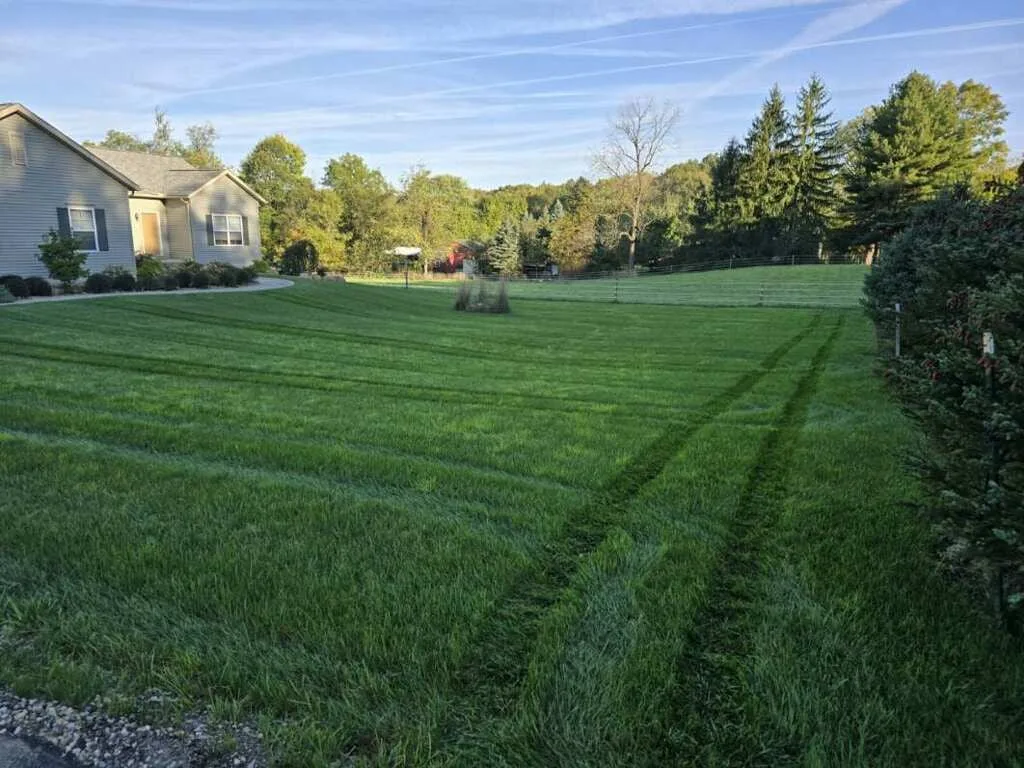
Finding the best lawn care company can feel weirdly harder than buying a major appliance. Every truck says “quality service,” every quote looks a little different, and your yard still has the same thin spots, weeds, muddy edges, or mosquito problem by the back patio.
Here’s the thing: the best lawn care company is not the one with the biggest ad or the cheapest special. It’s the one that actually fits your yard in northeast Ohio, your budget, and the specific problems you want fixed.
What “best lawn care company” really means for your yard
A “best” company is only best if the service matches your property and your expectations. A small shaded yard in Medina with tree roots, patchy turf, and tick pressure near the back fence needs a very different plan than a sunny commercial property in Akron that mainly needs weed control, clean edges, and dependable scheduling.
That matters more in northeast Ohio than a lot of people realize. Spring often starts with soggy soil, muddy traffic, and lawns that look rough after snow mold, salt exposure, and winter compaction. Then summer shows up with heat, dry stretches, crabgrass pressure, and stressed grass that suddenly looks thinner than it did in May. By fall, timing starts to matter again for aeration, overseeding, and weed control.
So when you compare companies, stop looking for a generic “best.” Look for the best fit. That small shift makes the whole search easier, because now you’re not chasing marketing. You’re checking for proof that a company can handle your actual yard.
Check #1: make sure the service list matches what you actually need
This is the first filter because it saves time fast. A company can be excellent at mowing and still be the wrong choice if your real issue is grubs, broadleaf weeds, or mosquitoes making your patio unusable at dusk.
A lot of frustration starts here. You hire a service assuming “lawn care” covers everything, then find out later the quote only included mowing, or only included fertilization but not weed control, or didn’t include any pest work around the home. By then, you’re already behind.
Before comparing prices, sort out the actual problem. If the lawn is pale, patchy, and full of dandelions, that points in one direction. If the turf looks decent but ants keep showing up near the foundation and mosquitoes swarm near the shrubs, that points in another. A good service list should line up with what you need fixed, not with whatever package name sounds nicest.
Lawn care vs. lawn maintenance: know the difference
These terms get mixed up constantly, and it leads to bad buying decisions.
Lawn maintenance usually means routine upkeep: mowing, trimming, edging, blowing off walks, maybe seasonal cleanup. It keeps the property neat. It does not necessarily improve lawn health.
Lawn care usually means treatments that affect the turf itself: fertilization, weed control, grub prevention, aeration, overseeding, disease attention, soil improvement, and similar work. It’s about how the grass grows, fills in, and handles stress.
That distinction matters because a tidy lawn can still be unhealthy. You can mow every week and still have compacted soil, weak root growth, and weeds taking over by July. On the flip side, you can invest in good turf treatments and still hate the look of the place if no one is trimming or maintaining edges.
If you need both, make sure the company truly offers both. Don’t assume.
Common service bundles in northeast ohio
Most companies in northeast Ohio group services into a few familiar bundles. You’ll usually see some version of fertilization and weed control as a base program. From there, add-ons often include core aeration, overseeding, grub prevention, surface insect control, flea and tick treatments, mosquito reduction, and perimeter pest control around the house.
Not every yard needs every add-on. That’s the catch.
A lawn with decent density and full sun may benefit most from a standard fertilization and weed control program plus fall aeration. A property near wooded edges or a creek line may need tick control or mosquito treatments because outdoor use matters just as much as turf color. A lawn that had grub damage last year may need prevention this year, while another yard would just be paying for an extra line item it may never need.
The right bundle should feel specific, not bloated. If every customer gets the same upsell stack no matter what the yard looks like, that’s a sign to slow down.
Signs you need a lawn care company, pest control, or both
A few problem patterns make the choice easier.
If you’re seeing bare patches, thinning grass, broadleaf weeds like dandelions and clover, uneven color, weak growth, or a lawn that never really bounces back after summer, that usually points to lawn care.
If the biggest headache is ants marching near the foundation, spiders collecting around entry points, fleas in pet areas, ticks near the fence line, or mosquitoes hanging around the patio and landscaping beds, that points to pest control.
Sometimes it’s clearly both. A stressed lawn often goes hand in hand with pest pressure around the property, especially on lots with shade, moisture, and heavy plant growth. In that case, one company handling both can be convenient, but only if both sides of the service are actually strong.
Check #2: look for licensing, insurance, and technician training
If a company applies products to your lawn or around your home, this is not optional. Credentials are not boring paperwork. They protect your property, your pets, your kids, and your wallet if something goes wrong.
A low quote stops looking cheap the second a sprinkler head gets broken, a driveway gets stained, a treatment is applied incorrectly, or a technician can’t answer basic safety questions. Good companies expect you to ask about licensing and insurance. The ones that get defensive are telling you something.
What licensing means in ohio
In Ohio, pesticide and treatment applications generally require proper state licensing for the work being performed. You do not need to memorize agency terms or license categories to shop smart. You just need to ask clearly: are licensed technicians handling the applications, and can the company verify that?
That simple question does a lot. It helps separate companies that take application work seriously from companies treating it like an afterthought.
Licensing matters because application timing, product choice, rate, weather conditions, and placement all affect results and safety. Weed control is not just “spray and go.” Perimeter pest work is not just “hit the base of the house and leave.” A trained, licensed technician should be able to explain what is being applied, where, why, and what you should do afterward.
If the answer sounds vague, rushed, or rehearsed, keep looking.
Why insurance matters more than a low quote
Insurance is one of those details people skip right up until they need it.
If equipment damages siding, irrigation, low-voltage lighting, decorative stone, or a car in the driveway, liability insurance is what keeps the issue from becoming your problem. If a worker gets hurt on your property, workers’ compensation coverage matters for obvious reasons. Without it, a “great deal” can get expensive fast.
This is especially relevant on properties with slopes, tight access, fencing, sprinkler systems, and crowded driveways, which is a pretty normal setup in a lot of northeast Ohio neighborhoods. One bad turn with a spreader, mower, or truck can create a headache you never signed up for.
You’re not being picky by asking for proof of insurance. You’re being smart.
Questions to ask about training
Training is where the difference shows up in real life. A company can have the right paperwork and still send out technicians who don’t communicate well or don’t notice obvious problems in the yard.
Ask how technicians are trained, how often training is updated, and whether someone on site can explain treatment decisions in plain English. You want to hear about ongoing education, safe handling, seasonal adjustments, and product knowledge. You also want to hear confidence without attitude.
A trained technician should be able to explain, for example, why a pre-emergent is being timed now instead of later, why nutsedge needs a different approach than crabgrass, or why watering matters after a certain application. No jargon wall. No mystery.
If you get a lot of “that’s just the program” answers, that’s not a good sign.
Check #3: find out how the company handles northeast ohio conditions
Local experience changes results. A treatment plan built for another region can miss the mark here, even if the company has a polished website and a strong sales pitch.
Northeast Ohio lawns deal with specific combinations of weather, soil, and seasonal timing. That’s true in Akron, Canton, Medina, Strongsville, and the Cleveland suburbs, even though the exact mix can shift neighborhood by neighborhood. The best lawn care company for your yard should sound like it understands those shifts without you having to teach them.
Soil, shade, and weather can change the whole plan
A yard is not just a rectangle of grass. Soil type, drainage, sunlight, and surrounding trees change what works.
Clay-heavy soil is common in parts of northeast Ohio, and it holds water differently than sandy soil. That can mean drainage problems in spring, compaction through the season, and stressed roots once summer heat kicks in. A shaded lot under mature maples may struggle with thin turf and mossy patches even if fertilization is fine. A sunny front lawn near the street may dry out fast and burn up by mid-July if the mowing height is too low.
Then there’s weather. Lake-effect shifts, cold snaps, wet springs, and sudden hot dry stretches can throw off generic service calendars. A company using a rigid, one-size-fits-all schedule may still perform decent work, but decent is not the same as right.
You want a company that adjusts. Not dramatically every week, but enough to account for what the season is actually doing.
Ask about regional weeds, grubs, and seasonal timing
The local troublemakers are fairly predictable, even if the timing changes a bit year to year.
Crabgrass is a classic example. Pre-emergent control has to be timed properly or the whole treatment loses value. Applying it too late is like throwing salt on an icy driveway after the car already slid. Dandelions and clover can take over thin turf if feeding and weed control are out of balance. Nutsedge is a separate issue entirely and needs to be identified correctly, because treating it like standard grass weed pressure can waste time and money.
Grubs matter too, especially if you’ve had turf that peels back like loose carpet in late summer or you’ve seen skunks tearing up sections overnight. Mosquitoes, ticks, fleas, and surface insects also become a much bigger concern on properties with dense shrubs, wooded edges, damp shade, and pet traffic.
Ask how the company handles timing for these issues in northeast Ohio specifically. A strong answer should sound local and practical, not copied from a national script.
Why local scheduling matters
Scheduling is where local knowledge turns into visible results.
Aeration done too early or too late may not line up with the stress cycle of your lawn. Overseeding has a better window than people think, especially if you want new grass to establish before colder weather. Grub prevention only helps if it’s timed to the life cycle it’s supposed to interrupt. Pest control around the home also changes with moisture, heat, and activity patterns.
A local company should know when to move, when to wait, and when weather means a treatment needs to be adjusted rather than forced onto the calendar. That sounds simple, but it’s one of the clearest differences between a company that knows the area and one that’s just filling routes.
Check #4: read reviews the smart way
Reviews can help a lot, but only if you read them like clues instead of scoreboard numbers. A 4.8-star rating looks nice. It doesn’t tell you much by itself.
The trick is to look for patterns. One glowing review could come from a customer who only had one visit. One angry review could come from a bad fit or a scheduling misunderstanding. What matters is what keeps showing up again and again.
What good reviews should actually mention
Good reviews usually include concrete details. You want to see comments about showing up when promised, explaining treatments clearly, improving weed or pest issues over time, handling billing correctly, and responding when follow-up service was needed.
Those details matter because they point to process, not just personality. “Nice company” is pleasant but not that useful. “The technician explained the grub treatment, left notes, and came back for breakthrough weeds” is useful.
Pay attention when reviews mention communication after the sale. That’s often where service quality either holds up or falls apart.
Red flags hiding in review patterns
A few complaints show up over and over for a reason. Missed visits, no-call no-shows, surprise fees, poor communication, burned lawns, inconsistent crews, and hard-to-cancel contracts are not minor annoyances. They usually point to system problems.
If several reviews mention that nobody answers questions clearly, believe that. If multiple customers say billing kept going after cancellation, believe that too. If you see repeated frustration about lawns looking worse after service with no follow-up plan, that tells you more than a star average ever will.
Also watch the tone of responses, if the company replies publicly. Defensive, blame-heavy responses are rarely a great sign. Calm, specific responses usually are.
Check recent reviews, not just old reputation
Service quality changes. Ownership changes. Office staff changes. Route density changes. A company that had a strong reputation three years ago may be stretched thin now, or it may have gotten much better after improving operations.
So look at recent reviews first. The last six to twelve months tell you more about what your experience is likely to be right now. That’s especially useful for seasonal services, where timing and communication can shift from year to year.
Think of it like judging a restaurant by last Friday, not by a memory from before the remodel.
Check #5: compare plans, pricing, and contract terms carefully
This is where a lot of people get tripped up. Two quotes can sound similar while covering very different things, and the cheapest price often leaves out the piece you assumed was included.
The goal is not to find the lowest number. The goal is to understand what that number buys.
What affects lawn care pricing
Pricing usually comes down to a few main factors: lot size, treatment frequency, service type, terrain, and add-ons. A small flat city lot with basic fertilization and weed control costs less than a larger corner property with slopes, multiple treatment zones, grub prevention, mosquito control, and follow-up visits.
Included service also matters more than the base price. Some plans include spot treatments between scheduled visits. Some charge extra. Some include broadleaf weed control but treat grassy weeds separately. Some include grub prevention while others price it as an add-on. Pest control around the perimeter may be bundled, or it may be a separate service with its own schedule.
Even access can affect pricing. Fenced yards, detached gates, steep grades, dog areas, and properties with tight service windows can all change the labor side of the quote.
You don’t need the cheapest quote. You need the clearest one.
One-time service vs. seasonal program
One-time service makes sense when the problem is narrow and immediate. Maybe you want a single mosquito treatment before an outdoor event. Maybe you need one perimeter pest application after noticing surface insect activity. Maybe you only want aeration and overseeding this fall.
But for ongoing turf health and weed control, seasonal programs usually work better. Lawns respond to consistency. Fertilization, prevention, and follow-up treatments tend to perform best when they’re part of a schedule rather than a random one-off fix. The same is true for recurring pest pressure in certain settings.
That doesn’t mean every program is worth it. It means you should match the structure to the problem. If the issue repeats every year, a one-time visit usually just resets the clock.
Watch for these contract details before you sign
Contract terms deserve more attention than most people give them. Auto-renewal is common, and sometimes that’s fine, but you should know exactly when and how it happens. Cancellation terms matter too. So do payment schedules, late fees, re-service policies, and how weather delays are handled.
You also want to know what “guarantee” actually means. Does it mean the company comes back for breakthrough weeds at no charge? Does it only apply within a short window? Does it exclude certain weeds or conditions? Vague guarantees sound comforting until you try to use them.
Get plain answers in writing. If a company can’t explain its own terms clearly before the sale, don’t expect that part to improve later.
Check #6: ask how they communicate and handle problems
Good service is not just treatment. It’s follow-through.
A lot of lawn and pest problems are manageable if someone explains what happened and what comes next. A lot of frustration comes from silence. If you can’t get a straight answer before signing up, the catch is that things usually do not improve after you become an account number.
Will you get clear visit notes after each treatment?
You should know what was applied, why it was applied, and what you need to do next. That might mean watering in a treatment, staying off the lawn for a certain period, keeping pets away until dry, or watching a specific area for continued activity.
Clear visit notes do two things. First, they help you care for the property correctly after service. Second, they create a record, which matters if results aren’t what you expected or if another issue shows up later.
This is especially useful when multiple services are involved. If you’re getting lawn treatments plus flea, tick, mosquito, or perimeter pest work, written notes keep everything from turning into guesswork.
How fast do they respond when something looks off?
Sometimes things happen. A patch yellows. Weeds break through. Heavy rain shows up right after an application. A gate gets missed. Pest activity lingers longer than expected in one corner of the property.
The real test is not whether every visit is perfect. The real test is how the company responds when something needs attention.
Good companies explain next steps clearly. Maybe the treatment needs time. Maybe a follow-up visit is appropriate. Maybe the problem is actually irrigation, mowing height, or shade stress rather than product failure. The point is that you get an answer and a plan.
Dodging calls, blaming you immediately, or speaking in vague circles is not good service.
Do you get one point of contact or a call-center shuffle?
Consistent communication makes a huge difference, especially if your property has recurring issues or multiple service types.
One point of contact, or at least a stable local office contact, means your history doesn’t disappear every time you call. That matters if you’ve already discussed pet routines, gate access, irrigation concerns, shaded trouble spots, or timing around outdoor events.
A call-center shuffle can still work if the company has strong notes and strong systems. But often it means you have to re-explain the same problem every time. That gets old fast.
Check #7: make sure the results and expectations are realistic
This check protects you from polished promises that sound good in March and feel ridiculous by July.
A healthy lawn takes time. Weed pressure drops over a season, not after one spray. Pest control often reduces activity and risk rather than creating some cartoon version of a bug-free universe. A trustworthy company should be confident, but grounded.
Beware of “perfect lawn” promises
“Perfect lawn” language is usually marketing, not reality.
Weather affects growth. So does mowing height, watering, shade, compacted soil, pet traffic, salt exposure, and the condition of the lawn before service even starts. If the yard is already thin and stressed, improvement may be steady but not instant. If weeds have been ignored for two full seasons, control may take more than one visit to look dramatic.
That’s normal.
Confident companies set realistic timelines. Slick ones sell magic. Pick the company that talks like your yard is real, not like it belongs in a stock photo.
Ask what success should look like after 30, 60, and 90 days
This is one of the best questions you can ask because it forces a practical answer.
Ask what you should expect after 30 days, 60 days, and 90 days. The answer should sound specific. Maybe after 30 days you should expect early weed suppression and better color. Maybe by 60 days you should expect less broadleaf pressure and steadier growth. Maybe by 90 days the lawn should look thicker, cleaner, and more even, assuming mowing and watering are reasonable.
For pest services, the timeline may look different. You may hear about reduced activity after the first treatment, followed by better control as the service cycle continues.
The point is not to get a perfect prediction. The point is to compare companies based on outcomes, not package names.
Know what still depends on you
Even the best company cannot mow at the right height for you, water for you, or notice every problem the same day it starts.
Your side of the equation is pretty simple: avoid mowing too short, water correctly when needed, clear pet waste from treatment areas, and speak up early if something looks off. None of that is about blame. It’s just reality. Lawn and pest services work best when the property isn’t fighting the treatment every week.
If a company explains that clearly and calmly, that’s a good sign. If it acts like results are either all on the service or all on you, that’s less convincing.
Common mistakes to avoid when choosing a lawn care company
Most bad lawn care decisions are not dramatic. They’re small misunderstandings that add up to wasted money, weak results, and one more season of looking at the same problems.
A few mistakes show up all the time, and they’re easy to avoid once you know what to watch for.
Picking only by price
Low quotes are tempting because lawn care looks simple from the outside. But price alone can hide missing visits, weaker follow-up policies, less experienced technicians, or plans that leave out the actual problem you need solved.
A quote that saves you a lump-sum quoted amount over a season is not a win if it excludes re-service, skips grub prevention you actually need, or doesn’t include enough visits to get weeds under control.
Cheap can be expensive in very boring, frustrating ways.
Buying services you do not need
Bigger packages are not automatically better.
If your main issue is grubs and broadleaf weeds, a giant bundle that adds every pest treatment under the sun may just inflate the bill. If you only need mosquito help near the patio during entertaining season, a broad full-property program may be more than necessary.
The right company should help narrow the service, not pad it.
Skipping the fine print
This is where surprise renewal terms, cancellation fees, vague guarantees, and inconvenient payment timing like to hide.
You don’t need to read a contract like a lawyer. You just need to slow down long enough to understand how long the agreement lasts, what happens if you cancel, what is included in follow-ups, and what happens if weather forces schedule changes.
A two-minute skim can cost you a season of annoyance.
Ignoring local fit
A lawn in northeast Ohio needs timing and treatment choices shaped by local weather, weed cycles, soil conditions, and pest pressure.
A company can have plenty of experience in lawn care and still be the wrong fit if the service model is too generic for the conditions here. You want timing that makes sense for spring mud, summer stress, fall recovery, and the usual local weed and insect patterns.
Local fit is not a bonus. It changes results.
Best lawn care company for different needs
The best lawn care company for you depends on what you actually want from the service. That’s the part ads usually skip.
Instead of looking for one winner, sort by use case. It’s a much better way to compare companies.
Best for basic lawn health and weed control
If your main goal is a greener, healthier lawn with fewer weeds, look for a company that does the fundamentals well: clear fertilization and weed control scheduling, solid follow-up policies, realistic expectations, and local timing that makes sense for northeast Ohio.
You do not need every add-on in this situation. You need consistency, communication, and a plan built around turf improvement instead of flashy extras. A company that can explain why your lawn is thin, what the treatment schedule is meant to accomplish, and how long improvement should take is usually a stronger fit than one trying to pile on services you didn’t ask for.
Best for lawn care plus pest control
If you want one company for both turf and outdoor pest issues, convenience matters, but coordination matters more.
Look for a provider that clearly offers both lawn and pest services as real strengths, not as a thin add-on. The service notes should explain each treatment separately. The scheduling should make sense for both sides of the property. The technician or office contact should be able to talk about weed pressure and mosquito reduction without sounding lost on either one.
This kind of setup can be especially useful if your yard issues overlap, like a shaded property with thin grass, tick concerns near the back edge, and mosquitoes near the patio.
Best for families with pets and kids
In this situation, communication should be near the top of your list.
Look for a company that gives clear post-treatment instructions, explains reentry timing plainly, answers safety questions without getting weird about it, and documents what was applied after each visit. You want calm, direct communication, not pressure or vague reassurance.
A company that understands how people actually use the yard is worth more than one that only talks in product names. Patios, play areas, pet runs, and side gates all matter here.
Best for commercial properties and HOAs
Commercial sites and HOA properties need reliability at scale.
The best fit here is a company with dependable scheduling, clean documentation, strong communication, and the ability to handle multiple service zones without confusion. Property managers usually need consistency more than charm. Visit records, weather communication, service timing, and fast response when something looks off all matter.
On these properties, one missed visit or one poorly documented treatment can create complaints from ten directions at once. So look for process. That’s what keeps larger accounts running smoothly.
Questions to ask before you hire anyone
A short, direct conversation can reveal a lot faster than three pages of marketing copy. The goal is not to interrogate anybody. It’s to get clear enough answers that you can compare companies on something real.
Seven quick questions that reveal a lot fast
Use these questions on a call or estimate visit:
- Are your technicians licensed for the treatments you provide in Ohio?
- Can you show proof of liability and workers’ comp insurance?
- What exactly is included in this plan, and what costs extra?
- If weeds or pests break through, what follow-up is included?
- How do you time treatments for northeast Ohio conditions?
- Will you leave visit notes after each service?
- What are the renewal and cancellation terms?
Those seven questions cut through a lot of fluff. A strong company should answer them clearly, without dancing around the details.
A simple way to narrow your list this week
If the search still feels noisy, keep it simple. Pick two or three local companies, ask the seven questions, and compare the answers side by side. Not the slogans, not the truck wrap, not the introductory discount. The answers.
Then start with the service that solves your biggest problem first. If weeds are taking over, begin there. If mosquitoes keep chasing you off the patio every evening, handle that first. If the lawn is thin and compacted after another northeast Ohio season, focus on the turf health basics before paying for extras.
Try that one move this week: cut your list down to three and make the comparison about fit, not hype. That’s usually the moment the “best lawn care company” becomes a lot easier to spot.
- Disclaimer: This article is for general informational purposes only. It is not professional advice, a quote, or a service agreement. Conditions at your home or property may differ; contact a qualified professional for an on-site evaluation before making repair, safety, or spending decisions.