
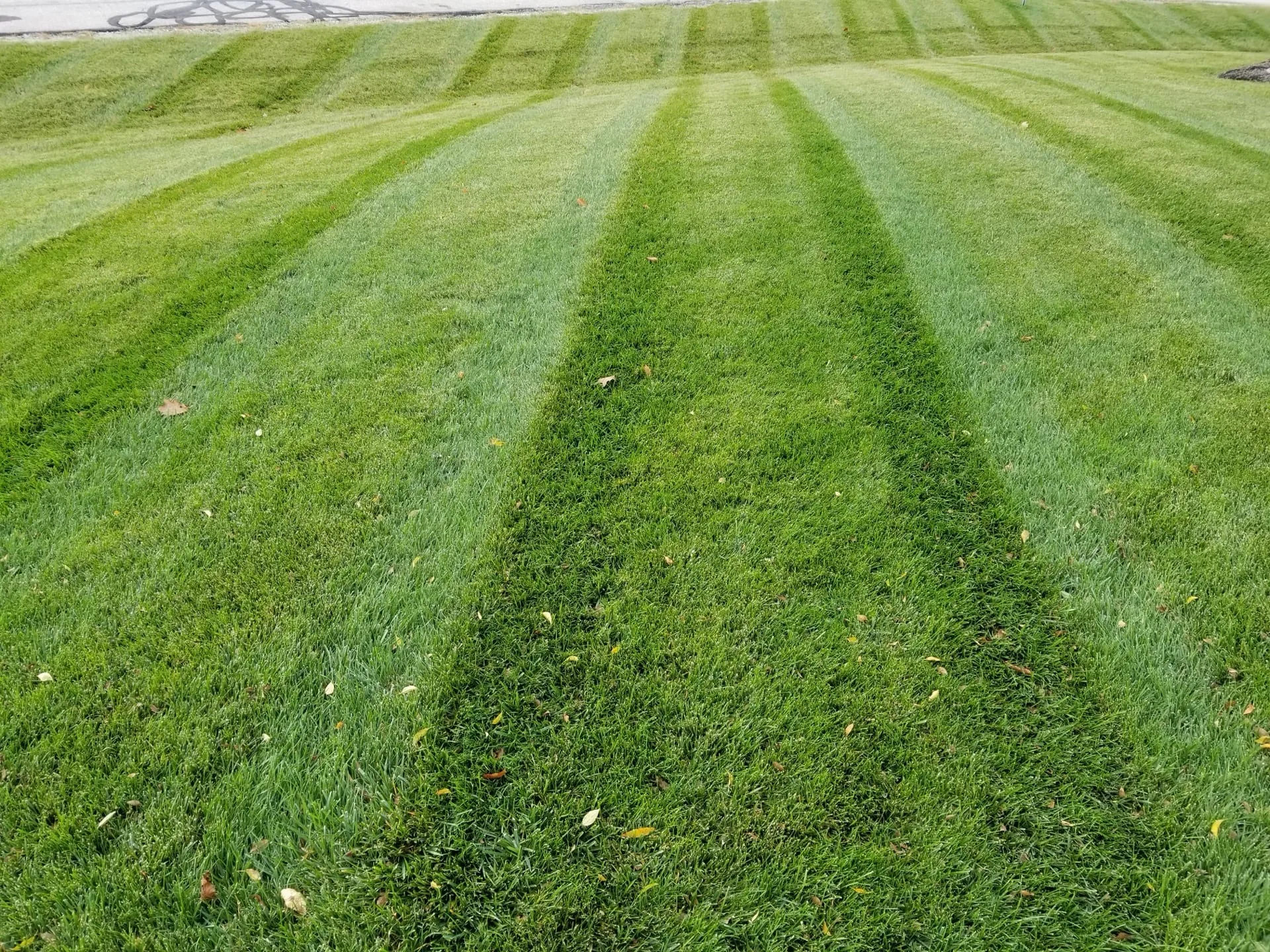
Brown patchy grass rarely means one simple thing went wrong. In Northeast Ohio, a lawn can come out of winter with tan matted spots, then turn around and show fresh brown circles in a sticky July heat wave, and those two problems usually have different causes. The good news is that the pattern tells a story, and once you read it right, the fix gets a lot simpler.
Here’s what you’ll learn:
- how to read the shape and timing of brown patches
- which causes are most common in Northeast Ohio
- how to tell stress, disease, pests, and damage apart
- what to fix first, before reseeding or treating
- how to keep the same spots from coming back
Brown patchy grass is a symptom, not a diagnosis. It usually shows up when roots, blades, or soil conditions get stressed by heat, water problems, disease, insects, pets, salt, or mowing mistakes. That’s why random guessing wastes time and money.
Why brown, patchy grass happens more than you think
A lawn can look like it failed overnight, but most brown patches build slowly and then show up all at once. You notice a straw-colored area after snow melt in March, or a few round spots near the sidewalk in mid-July, and suddenly the whole yard feels off.
Here’s the thing: grass responds to stress in a limited number of ways, and brown is one of them. Different causes can look surprisingly similar at first glance. Dry soil, compacted clay, fungus, grubs, dog urine, fertilizer burn, and road salt can all leave patchy dead-looking turf behind. The trick is not to treat the color. The trick is to figure out why that patch turned brown in the first place.
Start here: what your brown patches are telling you
The fastest way to narrow this down is to look at the patch itself. Size, shape, season, and location usually point you in the right direction before you ever buy a product or reseed a spot.
Clues to check before you do anything
Start with the shape. Small round spots often suggest disease, pet damage, or localized stress. Bigger irregular areas lean more toward drought, compaction, winter injury, or drainage trouble.
Then check how the grass feels. If it pulls up easily, roots may be gone from grub feeding or rot. If the soil feels rock hard, compaction is part of the problem. If it feels soggy for days after rain, poor drainage may be pushing the lawn toward disease. If it feels dusty and dry just below the surface, heat stress or shallow watering is more likely.
Timing matters too. Damage after winter often points to snow mold, salt, or winter injury. Problems that flare during humid summer weather can be disease. Spots near dog paths, driveways, sunny edges, or sprinkler misses usually have a simpler explanation.
The most common causes in northeast ohio
In this region, brown patchy grass usually comes down to a handful of repeat offenders: drought stress, uneven watering, compacted soil, fungal disease, grub or insect damage, pet urine, salt injury, mowing too short, dull mower blades, and nutrient issues. Some lawns have one clean cause. Plenty have two or three stacked together, which is why a stressed lawn often keeps getting worse until the underlying issue gets fixed.
Dryness, compaction, and other lawn stress problems
A lot of brown lawns are not diseased at all. Stressed grass turns brown fast, especially when roots cannot get enough water, oxygen, or room to grow.
Drought stress and uneven watering
Lawns do not dry out evenly. Sunny slopes, thinner soil near sidewalks, and spots the sprinkler barely reaches can fade first. Before grass turns brown, it often shifts to a gray-green color and starts holding footprints longer than usual.
Shallow, frequent watering makes this worse. It keeps the top layer damp while roots stay near the surface, which is a bad setup once summer heat settles in. Deeper, less frequent watering encourages stronger roots and more even color.
Compacted soil and poor drainage
Compacted soil is just soil pressed too tightly. Water struggles to soak in, oxygen struggles to move through it, and roots hit a wall. That often happens in high-traffic areas, along paths, near driveways, or in clay-heavy sections of the yard.
Poor drainage creates a different version of the same problem. Instead of drying out too fast, the lawn stays wet too long. Roots weaken, disease pressure rises, and patchy thinning follows. Either way, the lawn is stressed below the surface before the blades show it.
Mowing too short or dull blade damage
Cutting grass too short is like taking the roof off the house during a heat wave. Soil heats up faster, moisture disappears faster, and the lawn has less leaf surface to recover.
A dull blade adds another layer of damage. Instead of making a clean cut, it tears the grass, leaving ragged tips that turn brown. If the lawn looks faded right after mowing, especially across broad areas, the mower may be part of the problem.
Lawn diseases that cause brown patches
Fungal lawn diseases show up when temperature, moisture, and grass stress line up at the wrong time. A fungus is a disease-causing organism that thrives under the right conditions, especially when the lawn stays wet for too long.
Brown patch disease
Brown patch disease is one of the better-known summer lawn diseases, and it tends to show up during warm, humid weather with hot nights. It often appears as circular or irregular brown patches that can expand quickly in susceptible turf. According to Penn State Extension’s brown patch overview, prolonged leaf wetness and favorable temperatures help drive disease activity.
The visual clue is the patch shape and timing. If brown areas show up during muggy stretches and the lawn gets watered late in the day or stays damp overnight, disease becomes much more likely.
Dollar spot and other common look-alikes
Dollar spot usually starts smaller. Instead of broad circles, you see little bleached spots that can merge into larger patchy areas. That size difference matters. Small coin-sized spots tell a different story than a three-foot circle.
Other look-alikes can blur the picture, especially when a stressed lawn also has poor mowing or watering habits. That’s why patch size, recent weather, and moisture pattern matter more than color alone.
How to fix disease without making it worse
Start with conditions, not chemicals. Water early in the morning so the lawn dries during the day. Avoid evening irrigation. If growth is heavy and the canopy stays dense, improve airflow where possible and back off excess nitrogen during active disease pressure.
If disease is severe, bagging clippings can help reduce spread in the worst spots, though it is not always necessary. Fungicide can make sense when the disease pattern is clear and widespread, but guessing wrong wastes money and may miss the real issue.
Pests, pets, and other spot-specific damage
Some brown patches stay stubbornly localized. When damage keeps showing up in one specific area, look for a concentrated cause.
Grubs and root-feeding insects
Grubs damage lawns by feeding on roots. Once the roots are gone, the grass loses its anchor and dries out fast. The classic sign is turf that lifts up like loose carpet.
This kind of damage often gets worse during hot weather because the weakened grass cannot hold moisture. If a patch is brown and detached from the soil, root-feeding insects belong near the top of the list.
Surface insects and other lawn pests
Other insects can stress grass closer to the surface, especially in already dry or thin areas. The catch is that pest damage often overlaps with drought stress, so the lawn looks worse faster. If a patchy area seems active at the root line or keeps expanding despite good watering, pest pressure may be part of the problem.
Dog urine spots
Dog urine spots have a pretty classic look: a straw-colored center with a darker green ring around it. That green edge happens because nitrogen in small amounts can feed grass, while the concentrated center burns it.
Deep watering the spot soon after it happens helps dilute salts. For repeat areas, redirecting use or rinsing regularly makes a real difference. If the grass is already dead, the spot usually needs reseeding after the soil is flushed.
Salt damage near drives and sidewalks
Salt damage is common after Northeast Ohio winters, especially near roads, sidewalks, and driveways in places like Akron and Cleveland. You usually see browning along edges, splash zones, or runoff paths after thaw.
A good spring flush with water helps move excess salt deeper into the soil. Raking out dead material and cleaning up plow debris also helps exposed turf recover faster.
Nutrient problems and soil imbalances
Fertilizer helps when the lawn actually needs fertilizer. It does not fix every brown spot, and too much can create brand-new ones.
Nutrient deficiency
A lawn with a nutrient deficiency usually looks pale, thin, and weak before it looks fully brown. The change tends to be gradual rather than sudden. Low nitrogen is common, but if the same areas struggle year after year, a soil test is the trick. It tells you whether the problem is low nutrients, pH imbalance, or something deeper in the soil.
Fertilizer burn
Fertilizer burn usually looks sharper and more abrupt. You may see streaks, lines, or defined patches where too much product landed or where spreader coverage overlapped.
If you catch it early, watering the area deeply can dilute some of the excess. If the grass is already burned out, the damaged section may need repair once the salts move through.
Seasonal problems unique to cool-season lawns
Cool-season lawns handle spring and fall beautifully, but Northeast Ohio weather asks a lot from them.
Winter injury and snow mold after the thaw
After the snow melts, tan or matted areas can come from snow mold, ice cover, wind exposure, or winter drying. Iowa State Extension’s guidance on dead spring patches shows how winter conditions can leave patchy dead-looking turf even before active growth begins.
Snow mold often leaves flattened, crusty patches that improve once the lawn dries and gets raked lightly. Winter kill is harsher. If crowns and roots are dead, recovery is slower and reseeding may be needed.
Summer heat stress in cool-season grass
Kentucky bluegrass, perennial ryegrass, and fescue all struggle during hot, humid stretches. A lawn can look rough in July and still recover later if the crown, the growing point at the base of the plant, stays alive.
That matters, because not every brown lawn is truly dead. Some of it is dormant, basically shut down to survive the heat.
How to figure out the real cause step by step
Guessing leads to bad fixes. A quick check in the yard usually gives a much better answer.
Check the pattern, then check the roots
Look at the shape first. Round patches suggest one set of causes. Irregular spread suggests another. Notice whether the edge is sharply defined, darkened, or fading gradually into healthy turf.
Then inspect the roots and the surrounding conditions. Check nearby pet routes, shady damp pockets, runoff areas, and hot reflective spots near concrete. Context matters more than most people think.
Do a quick tug test and soil check
Grab a handful of affected grass and tug gently. If it stays anchored, root loss is less likely. If it lifts easily, inspect for grub damage or rotted roots.
Then push a screwdriver or trowel into the soil. If it barely goes in, compaction or dry soil is a problem. If it slides into mud days after rain, drainage is probably part of the issue.
When to call for a professional diagnosis
If patches keep spreading, return every season, or show mixed symptoms, a professional diagnosis saves time. That is especially true for larger lawns or commercial properties, where disease, soil issues, irrigation gaps, and insect damage can overlap in the same area.
The right fix for each type of brown patch
Once you know the cause, the repair path gets much more straightforward.
If the lawn is dry
Water more deeply and less often. Check sprinkler coverage, especially along edges, slopes, and sunny corners. Adjust for hot spots instead of assuming every part of the lawn needs the same amount.
If the soil is compacted
Core aeration helps relieve compaction by pulling small plugs from the soil so air, water, and roots can move again. After aeration, overseeding thin areas often gives better fill-in.
If disease is the problem
Focus on moisture control first. Water early, mow properly, and avoid pushing heavy fertilizer during active disease periods. Treat only after the disease pattern actually fits.
If pests are causing damage
Use a targeted pest treatment based on the insect involved and the right timing for that pest. Once the feeding stops, repair the damaged turf so bare areas do not turn into bigger thin spots.
If pets or salt are the cause
Flush the soil with water, reduce repeat exposure where possible, and reseed once conditions improve. If the same strip along the driveway browns every spring, the cause is probably not mysterious.
How to repair bare or thin patches
Repair works best after the underlying cause is handled. Otherwise, the same spot just fails again.
Rake, loosen, and reseed the spot
Rake out dead grass and loosen the top inch of soil. Use a seed mix suited to Northeast Ohio cool-season lawns, usually a blend with bluegrass, ryegrass, or turf-type fescue depending on the site. Spread seed evenly and make sure it has good contact with the soil.
Keep new seed alive
New seed needs light, frequent watering at first, not deep soaking. Keep foot traffic off the area and give it time. Early fall is usually the best window for patch repair because soil is warm, air is cooler, and weed pressure drops.
How to keep brown patches from coming back
Prevention is usually less dramatic than repair, but it works better.
Better watering and mowing habits
Water early in the day so the lawn dries properly. Mow high enough to protect roots and shade the soil. Keep mower blades sharp so the grass gets cut, not shredded.
Aeration, feeding, and seasonal lawn care
Annual aeration helps compacted lawns breathe again. Smart feeding supports steady growth without pushing weak, disease-prone flushes. Seasonal checks for drainage, salt buildup, and insect activity help catch trouble before it spreads.
One smart first step to try this week
Go out to the worst brown patch and do one simple test: tug on the grass. If it lifts up easily, start with roots and pests. If it stays put, check moisture and soil next. That one small check usually tells you more than another bag of lawn product ever will.
- Disclaimer: This article is for general informational purposes only. It is not professional advice, a quote, or a service agreement. Conditions at your home or property may differ; contact a qualified professional for an on-site evaluation before making repair, safety, or spending decisions.