
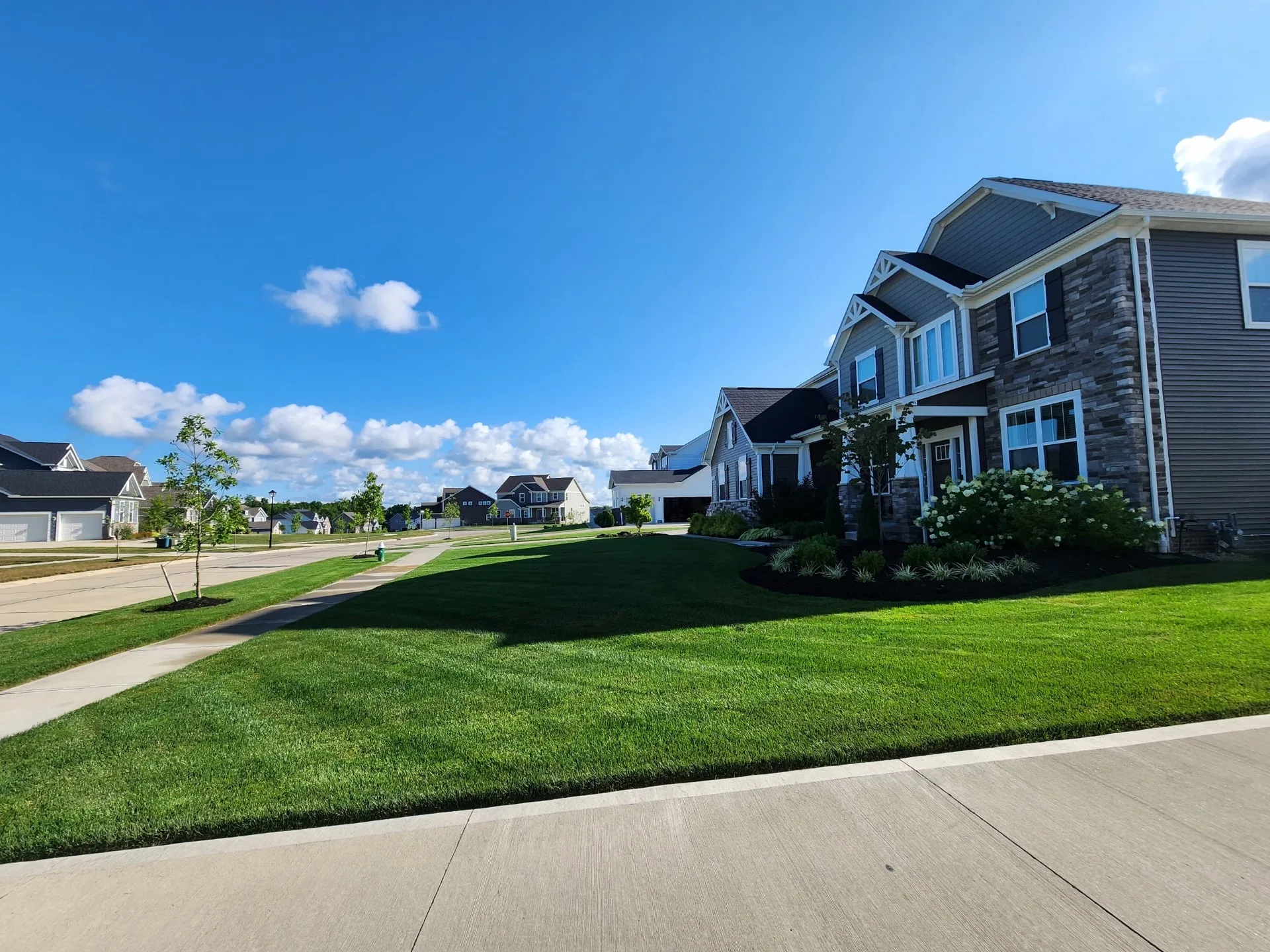
Northeast Ohio lawns go off-color for a dozen reasons that are not a fungus ticket. A Ravenna fence line stays wet after every thunderstorm. A dull blade on a Streetsboro lot turns the whole canopy gray overnight. A Hudson irrigation head throws onto the driveway and the bounce-back ring looks like a disease circle from the kitchen window.
Portage Turf & Pest starts with pattern, not product. Cool-season turf around Portage County lives in clay that holds water and then seals. Color change is the symptom. Moisture, cut quality, insects, and true disease are competing explanations. We pick one with evidence.
Fence lines, low spots, and mower scars first
Walk the blotch at 8 a.m. and again after work. If it is darker when wet and pale when dry, think water first. If it follows the mower turn at the end of a row, think mechanical injury. If the sod lifts like a carpet, we look for grubs before we talk leaf disease.
Photograph a wide shot and a close shot of the blades. Note last fertilizer and whether nights have stayed humid. Lake-effect air can keep a lawn wet at the surface even when the week felt “dry” to the owner. That matters for disease risk, but it also matters for a simple drainage story.
What we will not do on the first look
We will not hang a fungicide on a phone photo of yellow grass. We will not add irrigation minutes because a patch is pale if the pale area is already the wettest rectangle on the lot. Adding water to a sealed clay low spot is how you grow a real pathogen on top of a cultural problem.
Pest activity at the wood line is a separate file. Chinch-like thinning in heat still needs insect evidence. Do not merge the lawn color complaint with a wasp nest on the eave. Those visits answer different questions.
Irrigation and cut height are cultural, not optional
If the controller still starts at 10 p.m., leaf wetness sits until morning on Portage County clay. Move it earlier while we diagnose. Raise a scalped deck. Tell us if a neighbor’s downspout dumps onto your side yard. Those notes beat a product name remembered from a big-box aisle.
A follow-up look after a dry stretch can be more honest than stacking two treatments in five days. If we cannot tell which action changed the lawn, we learned nothing.
Send the lot, not a diagnosis
City, photos from two times of day, mowing height, last water change, and whether dogs use the patch. Contact us and we will say whether this is disease, drought skip, insects, or a dull blade. Aurora and Ravenna share weather. They do not share your fence line. That fence line is usually the story.
What we put in the closeout
The notes should say whether this was coverage, cut quality, insects, drainage, or confirmed disease. If we treated, they should say what weather would make a relapse likely, including night water on Portage County clay. If we did not treat, they should say what you should watch for seven days.
Hudson and Aurora lots share lake-effect humidity. They do not share your fence-line downspout. Bring that downspout into the first call. We would rather look twice than sell a tank mix because the rye looked yellow from the road.