
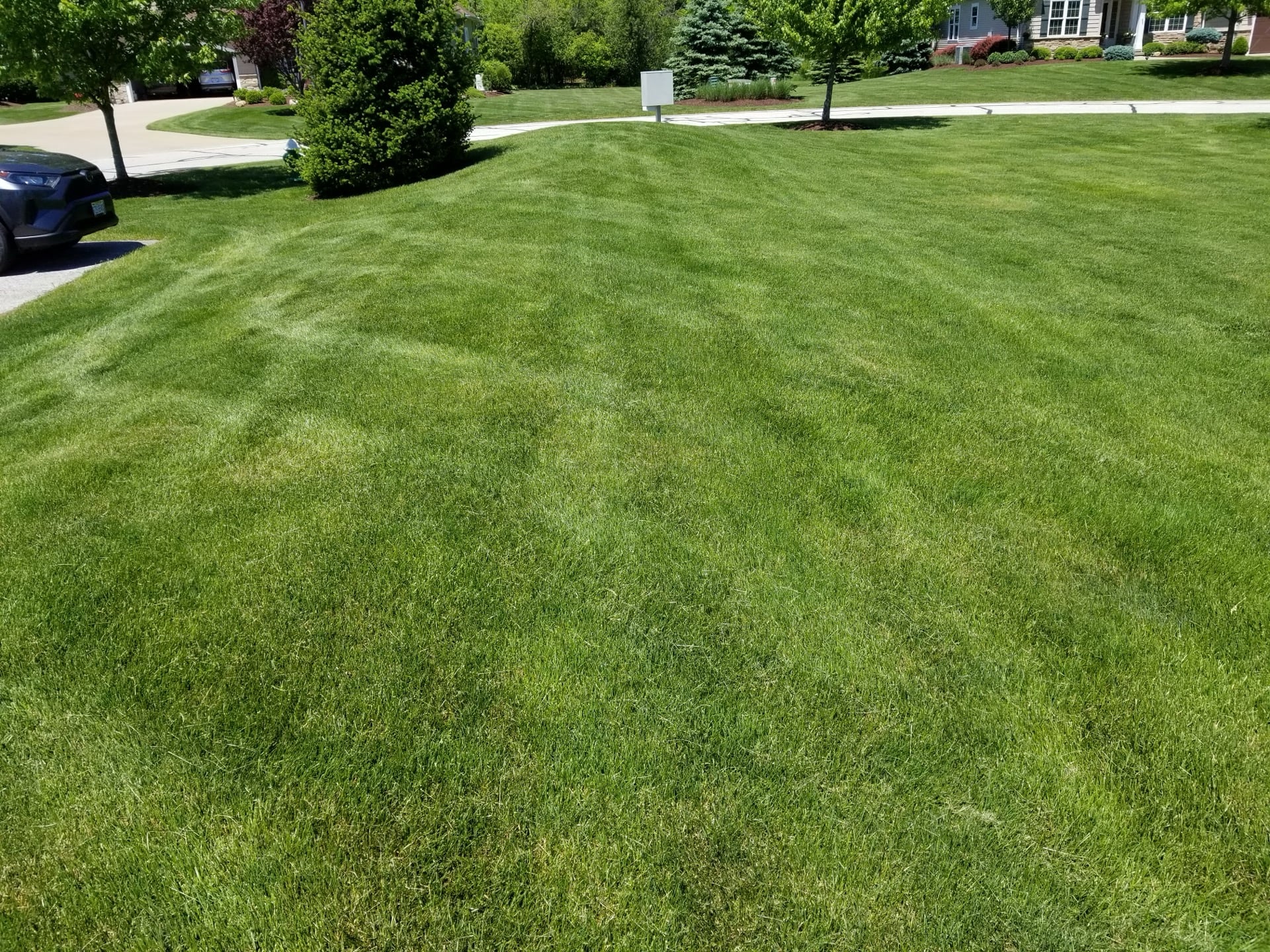
Brown or yellow circles where your dog goes are one of the most frustrating sights for pet owners in Hudson, Kent, and Akron. The good news: you can fix the damage and take steps so it does not keep happening. Here is a straightforward guide to repairing dog spots and reducing new ones, written for Northeast Ohio lawns.
Why Dog Urine Burns the Lawn
Dog urine is high in nitrogen. In small amounts, nitrogen can green up grass; in a concentrated dose in one spot, it overloads the roots and the grass dies or turns brown. The center of the spot is often completely dead, with a darker green ring around it where the nitrogen was diluted enough to act like fertilizer. Understanding this helps you choose the right fix and prevention.
Fixing Existing Dog Spots
You have two main options: repair the spot yourself or let the lawn fill in over time. For visible patches, repair usually looks better and speeds recovery.
Option One: Rake, Reseed, and Keep It Moist
What to do:
- Rake out the dead grass in the spot. Remove the brown material and loosen the top layer of soil so new seed has contact with the ground.
- Add a thin layer of topsoil or compost if the soil is compacted or poor. You do not need a lot; just enough for seed to nestle into.
- Spread seed that matches your lawn. In Northeast Ohio, cool season grasses like Kentucky bluegrass, perennial ryegrass, or tall fescue are standard. Use the same blend or type as the rest of your yard so the patch blends in.
- Press the seed into the soil by walking on it or using a rake turned upside down. Seed needs soil contact to germinate.
- Keep the spot moist for the next two to three weeks. Water lightly once or twice a day so the surface does not dry out. Do not flood it; that can wash the seed away.
For larger areas or many spots, a full seeding program may make more sense. We can match the right grass type and timing for your property.
Option Two: Patch With Sod
If you need the spot to look good quickly and you have sod available, you can cut out the dead area, level the soil, and lay a piece of sod. Water it well until the roots knit into the soil. Sod is more expensive than seed but gives an instant fix.
When to Repair
Spring and early fall are the best times to seed in our climate. Cool season grasses establish well when temperatures are mild and moisture is easier to maintain. Summer seeding often struggles with heat and dry spells; winter is too cold for germination.
Reducing New Dog Spots
You cannot eliminate urine entirely, but you can dilute it, move it, or strengthen the lawn so it handles it better.
Dilute the Spot Right After Your Dog Goes
If you can, pour a large cup or two of water onto the spot right after your dog urinates. Diluting the urine spreads the nitrogen so it is less likely to burn. This is one of the simplest and most effective steps.
Designate a Potty Area
Train your dog to use one area of the yard, such as a mulched or gravel spot, or a corner that is less visible. You sacrifice a small zone but protect the rest of the lawn. Some homeowners in Stow, Cuyahoga Falls, and Fairlawn use a gravel or mulch patch and replant or refresh that area as needed.
Improve Overall Lawn Health
A thick, healthy lawn recovers better from occasional urine. Good fertilization and mowing habits build strong roots and dense grass. When the lawn is stressed, thin, or underfed, damage shows up more and lasts longer. A soil test can tell you if your soil needs lime or other amendments so your grass can use nutrients properly.
Water the Lawn Regularly
Consistent watering helps dilute and move nitrogen through the soil instead of letting it sit in one place. It also keeps the grass growing so it can recover from small hits. Do not overwater; follow a schedule that fits our area and your soil.
What Does Not Work (So You Can Skip It)
- Changing the dog’s diet to alter urine pH might help in theory, but it is not reliable for preventing burns and can affect the dog’s health. Talk to your vet before making diet changes for this reason.
- Pills or additives that claim to stop lawn burn are often unproven and can be wasteful. Diluting with water and improving lawn health are more reliable.
- Ignoring soil health. If the rest of the lawn is thin or struggling, new spots will keep standing out. Building a stronger lawn with good lawn care is a better long term strategy.
When You Have a Lot of Spots or a Large Damaged Area
If the yard is covered in patches or the damage is widespread, spot repair may not be enough. In that case:
- Consider a full lawn renovation or seeding so the whole lawn is the same grass type and density.
- Have your soil tested and correct pH and nutrients so new grass establishes well.
- Get on a fertilization program so the repaired lawn stays thick and can tolerate future urine better.
Summary: Fix and Prevent Dog Spots
To fix existing spots:
- Rake out dead grass, add a little soil if needed, spread seed that matches your lawn, press it in, and keep the spot moist for two to three weeks. Seed in spring or early fall for best results.
To reduce new spots:
- Dilute urine with water right after your dog goes.
- Consider a designated potty area (mulch or gravel) to limit damage to the rest of the lawn.
- Keep the lawn healthy with proper fertilization, mowing, and watering so it recovers better.
To get help:
- For large areas, multiple patches, or a lawn that needs a full program, contact Portage Turf & Pest. We serve homeowners across Northeast Ohio, from Akron to Medina to Strongsville, with lawn care and soil testing tailored to your property.