
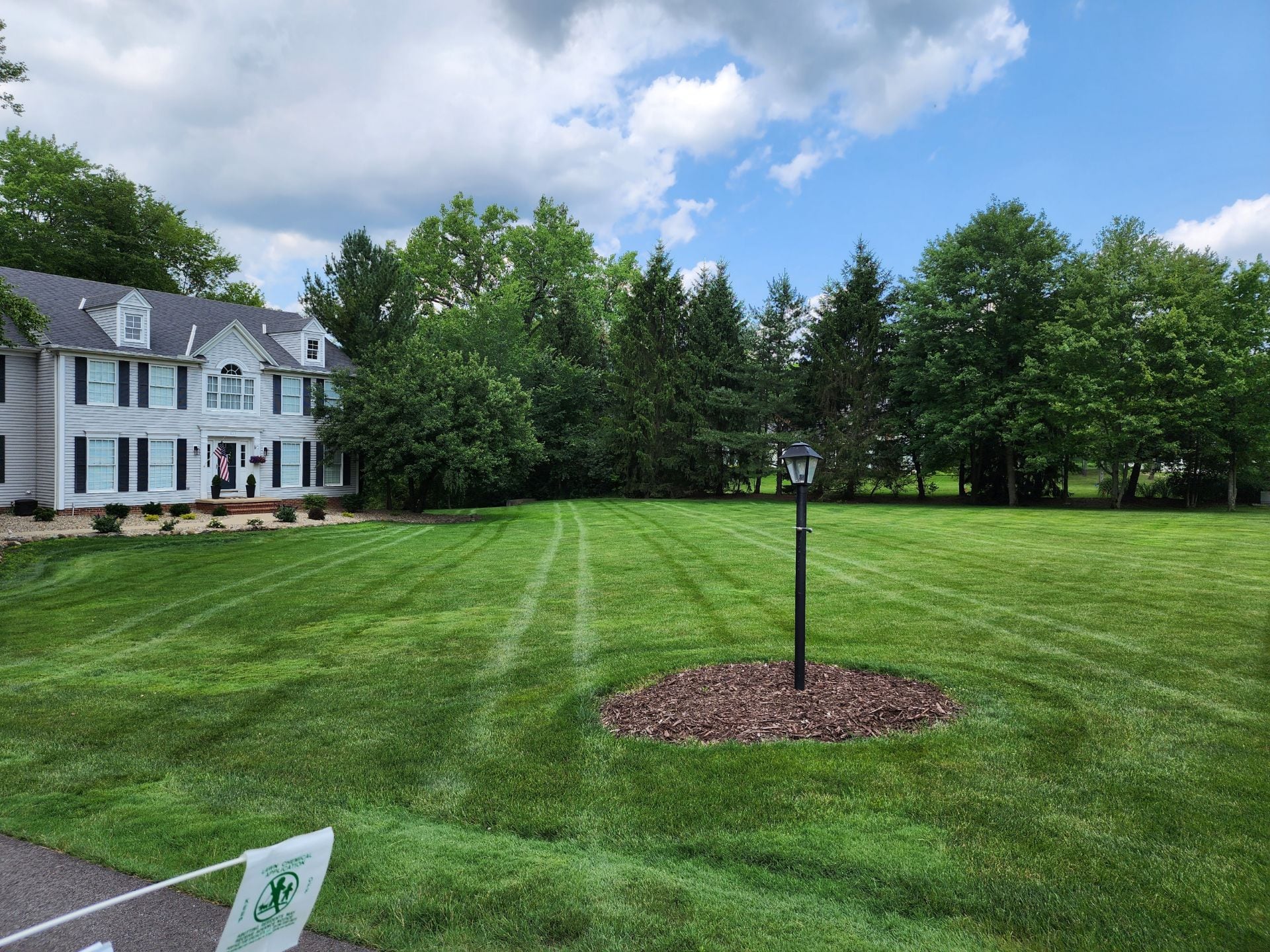
The first sunny stretch in March tricks a lot of us into thinking the lawn is ready for a heavy feeding. In Northeast Ohio, cool-season grasses wake up on their own schedule, and ground that is still cold or saturated does not use nitrogen the way midspring turf does. Understanding that gap saves money, reduces runoff risk, and lines up better with how we build a full lawn care program for properties from Stow to Fairlawn.
Green cast versus real growth
You might see a faint green haze before grass is truly growing. Color change can run ahead of root uptake. If you spread fertilizer while the soil is still cold, a large share of the nutrient can sit unused until temperatures stabilize, or it can move with melt and rain toward hard surfaces and low spots. That is why we tie early applications to green-up and regular mowing, the same idea outlined in our spring lawn cleanup article, not only to the calendar.
Soil test still comes first
Early spring is a good time to review or repeat a soil test and boosters if you have not had one in a few years. pH and base saturation drive how well fertilizer works. Homeowners in Medina, North Royalton, and Strongsville often see bigger gains from correcting lime or sulfur needs than from an extra early nitrogen shot. Once the test is in hand, a fertilization program can be sequenced to match your numbers instead of a one-bag-fits-all approach.
Soggy soil and compaction
If snowmelt or spring rains leave ruts when you walk the lawn, hold off on granular applications and on aggressive raking. Wet soil compacts easily, and products applied over standing water or repeated ice layers rarely end up where you want them. For patterns that repeat every spring, soggy lawn after snow melt covers grading, downspouts, and when to consider professional help. Later in the season, core aeration may be part of the fix if compaction is chronic.
Mowing signals readiness
A practical homeowner rule: wait until you are mowing regularly at a sensible height before you treat the lawn like it is in full growth mode. The first cuts should be light, as described in proper mowing and more, with sharp blades and a dry lawn. When you are trimming every week and the clippings are consistent, the plant is usually ready to use a timed feeding. That window in our service area is often late March into April, but it shifts year to year.
Weed control timing is separate
Pre-emergent and early post-emergent work has its own clock tied to soil temperature and weed species. Applying too early can shorten control; too late misses the target. That is one reason weed management belongs inside a coordinated plan rather than a single early impulse buy. Our fertilization program integrates weed control with nutrient timing for Northeast Ohio lawns.
Bottom line
Patience in early spring is not neglect; it matches how cool-season turf actually wakes up. Pair green-up and mowing signals with soil data, then layer fertilization, aeration, or seeding as the season allows. If you would rather not track the details yourself, contact Portage Turf & Pest for a program shaped to your lot in Ravenna and surrounding communities, or call (330) 296-8873 for a quote.