
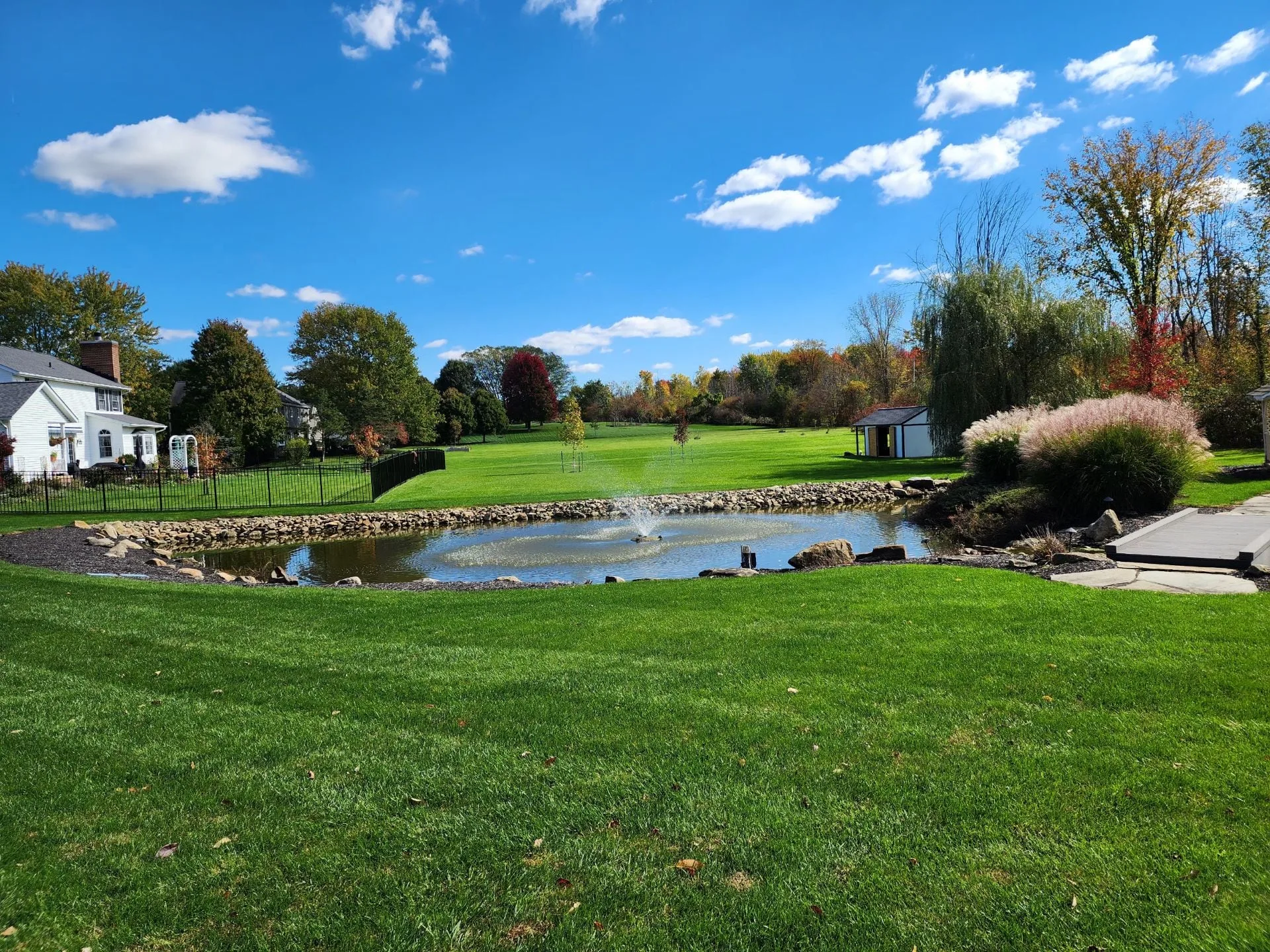
Debates about soil biology products and straight nitrogen replay every spring when lawns green unevenly after a wet or late winter.
Clay in Ravenna and Stow holds nutrients differently than sandy pockets near the Cuyahoga corridor. Dark color without root depth is a familiar outcome when soluble nitrogen outruns what biology and moisture can support.
Portage Turf & Pest reads soil test and boosters results, turf density, and irrigation habits before recommending a seasonal fertilization path on organic minded programs.
What biology products claim versus field signals
Humates, microbe teas, and similar inputs aim to support mineralization and rooting on tired soils. Response varies with temperature, existing organic matter, and whether the site already receives regular topdress or compost integration.
Rapid color from soluble nitrogen is measurable within days on cool soil that is awake. Biology led programs may show steadier tone over weeks when soil conditions cooperate, but they rarely mask compaction or shade stress alone.
Neither story is a diagnosis from one lawn photo. Uncertainty is normal when two products were never compared on the same exposure with the same water record.
Nitrogen forms on Northeast Ohio clay
Quick release sources can push leaf growth before roots on cold wet clay, which invites summer decline when heat arrives. Slow release and organic based nitrogen spread risk but still depend on microbial activity and moisture.
Low pH or excess phosphorus from historic lawn habits can change what a bag delivers at depth. soil test and boosters maps often explain why neighbor lots diverge under superficially similar lawn care contracts.
Straight nitrogen debates ignore whether potassium and micronutrients need attention for drought stress resilience on the same panel.
When biology first may fit the site
Older suburbs with thin topsoil over subgrade, construction scrape, or years of short mowing sometimes benefit from building organic matter before chasing color spikes. organic lawn care schedules may emphasize soil conditioning when tests show weak structure.
Shade and tree root competition change uptake even when feed rates look textbook. Biology talk without canopy notes often wastes a season on understory turf that never sees full sun.
Biology products are not a substitute for fixing drainage lows that stay saturated into June. Waterlogged clay suppresses roots regardless of additive label.
When measured nitrogen still leads
Established turf with adequate organic matter and even density may need straightforward nitrogen within label limits to recover from winter thinness. Denying soluble feed on those panels sometimes delays fill until annual weeds exploit gaps.
Spring fertilization timing on cool season grass should follow soil temperature and growth, not only promotional mailers. how to water your lawn records from the same weeks help explain whether color change came from feed or from accidental over irrigation.
Split applications reduce leaching risk on sloped clay toward storm inlets, a common detail on Hudson lots with rear swales.
Irrigation and mowing as silent partners
Overwatering soluble nitrogen programs on clay can produce lush blades with weak crowns. how to water your lawn depth targets matter as much as product class when lake effect rains already saturated low bowls in May.
proper mowing and more height changes how fast nitrogen fueled growth burns off stored carbohydrate. Taller summer cuts on traffic panels may slow stress more than another biology application on the same stressed arc.
Organic programs still need mechanical discipline. Feed debates that ignore mower and sprinkler truth usually repeat next year.
Reading uncertainty without product religion
A/B comparisons on single home lots rarely meet scientific control. Photo series, probe moisture, and growth recovery after foot traffic pressure are more honest than loyalty to one additive line.
Technicians may recommend shifting emphasis mid season when soil tests or visual density change. That is planning, not program failure, when notes explain why.
Send test PDFs, zone maps, and June color photos through contact. Portage Turf & Pest documents tradeoffs on Kent and Streetsboro routes so homeowners choose biology emphasis or measured nitrogen with eyes open.
Integrating decisions into annual lawn care
aeration and fall seeding plans should agree with spring feed philosophy. Deep nitrogen without post summer recovery often paints a false picture of soil health.
Pest and grub history can thin turf that later gets blamed on feed class. grub control evidence belongs in the same annual map when debating next spring inputs.
Call (330) 296-8873 when color and density diverge across one property. Portage Turf & Pest keeps lawn care, organic lawn care, and fertilization aligned to Northeast Ohio clay reality rather than to slogan level either or debates.