
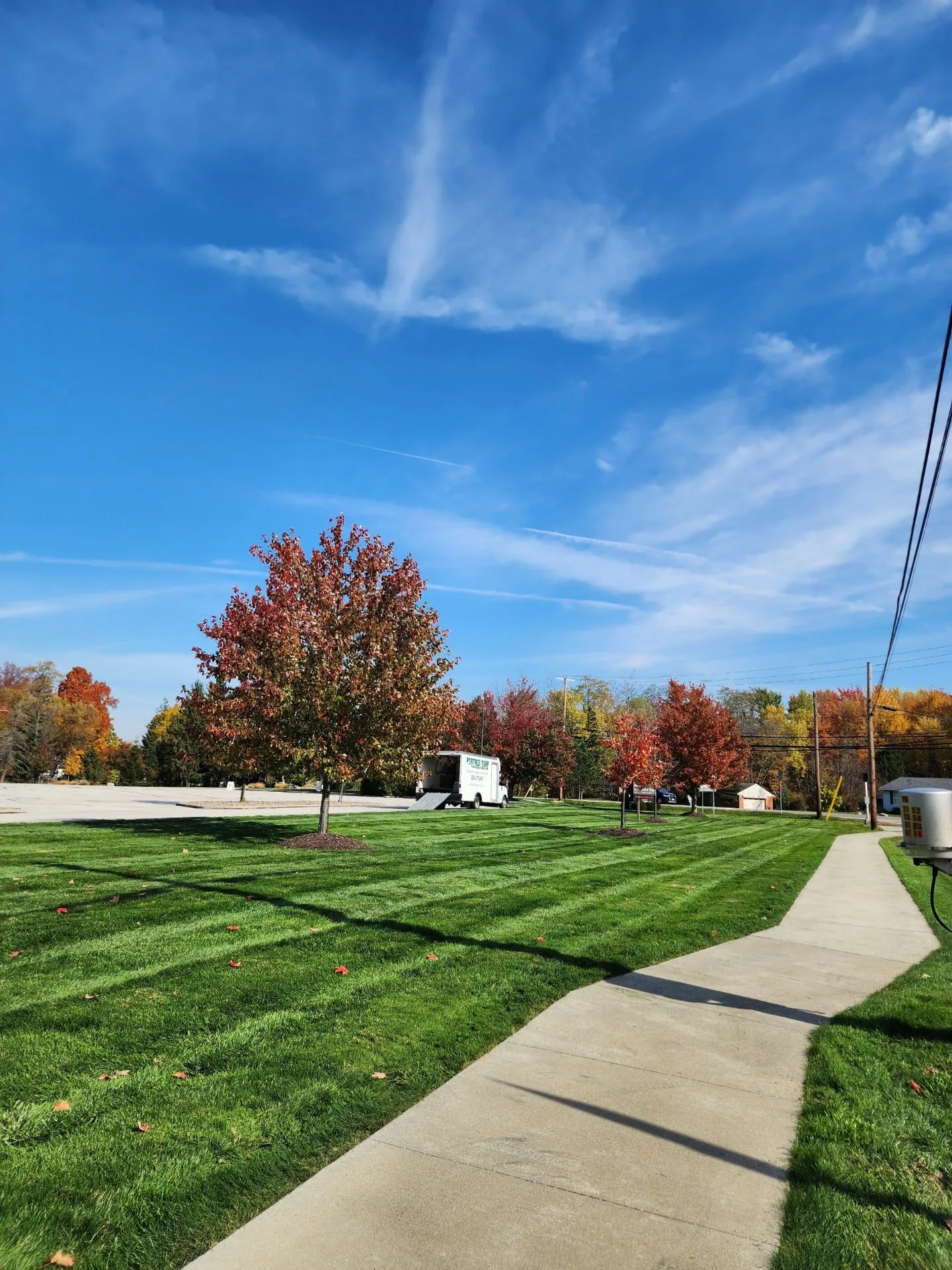
If you’ve ever priced lawn service in Northeast Ohio, you’ve probably seen the same thing happen: one yard gets quoted a few hundred dollars, another gets a number twice as high, and both look pretty normal from the street. That’s why lawn treatment cost feels slippery. By the time spring green-up starts in Cleveland or Akron, you just want to know what’s standard, what’s extra, and what actually makes sense for your yard.
What lawn care usually costs in northeast ohio
For most Northeast Ohio properties, a basic annual lawn treatment program usually lands somewhere around a moderate-to-significant cost range for that type of job for the season. A more complete plan, with stronger weed control and better timing across the year, often runs a mid-range repair bill that varies with parts, labor, and system age. If your yard needs repair work, or if you add services like aeration, overseeding, or grub control, total yearly cost can move past a mid-range repair bill that varies with parts, labor, and system age pretty quickly.
That range feels wide because “lawn care” means different things depending on the quote. Some plans cover only fertilization and broadleaf weed control. Some include pre-emergent crabgrass treatment, spot spraying between visits, and a final winterizer application. Others start with a low number and leave out the stuff most Northeast Ohio lawns end up needing.
Typical price ranges for common lawn treatment plans
A basic seasonal plan, usually 4 to 5 visits, is often the entry point. Expect roughly a moderate-to-significant cost range for that type of job for a smaller or average-size yard if the lawn is already in decent shape. This kind of plan usually focuses on fertilizer, weed control, and maybe crabgrass prevention.
Per-visit service often sounds flexible, but it tends to cost more over the course of a season if you need multiple applications. A single visit may run about a relatively modest cost for that type of work depending on yard size and treatment type. If you piece together five or six visits one at a time, the total can quietly climb.
Higher-touch plans, often 5 to 7 visits with closer timing, stronger follow-up, and optional retreatments, usually fall in the a moderate-to-significant cost range for that type of job range before add-ons. For larger properties, corner lots, or lawns with heavy weed pressure, those numbers can go higher.
What counts as lawn treatment, and what does not
Here’s the thing: lawn treatment usually means chemical or nutrient applications, not full yard maintenance.
Fertilization feeds the grass. Weed control targets broadleaf weeds like dandelions and clover. Pre-emergent treatment aims to stop weeds like crabgrass before you see them. That core bundle is what most lawn treatment plans are built around.
But mowing is different. Landscaping is different. Mulch installation, trimming shrubs, spring cleanup, and leaf removal usually sit outside a lawn treatment quote. Aeration and overseeding are also separate in many cases, even though they matter a lot if your lawn is thin. Grub control, surface insect control, and lawn disease treatments are often add-ons too.
So if a quote sounds cheap, look at what category it’s actually covering. You may be pricing only part of the job.
The biggest things that change your lawn treatment cost
The catch is that lawn treatment cost is never just one flat rate. Two houses on the same street can have very different pricing because the lawn itself changes how much material, time, and follow-up the service takes.
Yard size, layout, and how easy the property is to service
Size is the obvious one, but layout matters almost as much. A simple, open backyard is easier to treat than a property with multiple fenced sections, narrow side strips, steep slopes, or small turf areas broken up by beds and hardscaping.
That matters because treatment companies usually price for both material use and time on site. A 10,000 square foot lawn that’s easy to spray may cost less than a smaller yard with gates, odd corners, and patchy sections in the front, side, and rear. Corner lots can also add cost because there’s simply more exposed turf to treat.
So if your quote looks high compared with a neighbor’s, the difference may be shape, not just size.
Your lawn’s current condition
A struggling lawn costs more to fix than a healthy lawn costs to maintain. That’s not sales talk. It’s just true.
If your yard has heavy weeds, thin turf, compacted soil, bare spots, grub damage, summer burn, or fungus issues, the first season often includes more targeted work. That can mean extra products, tighter timing, and separate visits that a healthier lawn wouldn’t need. A decent lawn can often stay on a straightforward program. A stressed lawn usually needs repair before maintenance really works.
Think of it like repainting a wall. If the surface is clean, one coat goes a long way. If it’s peeling and stained, prep is the real job.
Program length and number of visits
A 4-step plan will usually cost less than a 6-step plan. But more visits are not just padding the bill. In many cases, they improve timing, and timing is half the battle in lawn care.
Northeast Ohio lawns go through distinct seasonal shifts. Early spring crabgrass prevention, late spring weed pressure, summer stress, and fall recovery all happen on different clocks. More visits let treatments line up better with what the lawn is actually dealing with. That often leads to steadier results and fewer ugly gaps during the season.
If your goal is basic control, a shorter program may be enough. If your goal is visible improvement, more visits usually pay off.
What services cost extra beyond a basic treatment plan
This is where a low quote can stop being a low quote. Basic treatment plans often cover the minimum. The full-season total comes from the extras your lawn actually needs.
Aeration and overseeding
In Northeast Ohio, fall is usually the money season for aeration and overseeding. After summer stress fades and before cold weather settles in, cool-season grasses have the best chance to thicken up.
Aeration pulls small plugs from compacted soil so water, oxygen, and nutrients can get down to the roots. Overseeding adds new grass seed to thin areas. If your lawn feels hard underfoot, puddles easily, or never seems to thicken, this service matters more than another round of fertilizer.
Expect aeration and overseeding to add roughly a moderate-to-significant cost range for that type of job or more, depending on yard size and seed needs. It’s one of the most common extra charges, and honestly, one of the most worthwhile if your yard is thin.
Grub control, insect control, and disease treatments
These are usually not part of a standard weed-and-feed plan. Grub control targets larvae that chew roots underground. Surface insect control may cover pests that damage grass blades. Disease treatments address fungal problems that can show up during wet, humid stretches.
Worth paying for? Yes, if you’ve had a known issue, visible damage, or a property history that keeps repeating itself. No, not always as an automatic add-on with no clear reason. If your lawn has never had grub damage, you may not need that treatment every year. If circular brown patches keep showing up in summer, disease treatment may be the missing piece.
The key is simple: pay for targeted protection when there’s a real problem or a strong pattern, not just because the menu exists.
Soil testing, lime, and specialty treatments
Sometimes a lawn gets fed regularly and still looks tired. That’s when soil problems move to the front of the line.
Soil testing checks things like pH and nutrient balance. Lime is often used when soil is too acidic, which can keep grass from taking up nutrients properly. Specialty treatments may include micronutrients, soil conditioners, or treatments tailored to a persistent issue.
These services usually cost extra, but they can explain why a lawn keeps stalling out even with regular treatment. If your grass never seems to respond the way it should, this category is worth a closer look.
How to compare lawn care quotes without getting fooled by the low number
A lawn quote should read like a grocery receipt, not a mystery box. The headline number matters, but the line items matter more.
Questions to ask before you sign
Before you agree to anything, get clear on the structure of the plan. Ask how many visits are included and what happens at each one. Ask if crabgrass prevention is part of the program or a separate charge. Ask what weeds are covered and whether retreatments cost extra if stubborn weeds come back.
Also ask how yard size is measured. Some pricing is based on treatable turf area, not total lot size, and that can change the number a lot. If you’re comparing companies, make sure the quotes are built on the same measurement logic. One more thing: ask directly whether grub control is included, optional, or not offered at all.
A quote gets a lot easier to judge once you know exactly what you’re buying.
Signs a quote is too vague
Vague quotes usually sound nice up front and frustrating later. Watch for broad promises like “full lawn care” with no visit count, no treatment list, and no explanation of what happens if weeds persist. That kind of quote leaves too much room for surprise charges.
Another red flag is a very low seasonal price that leaves out services commonly needed in Northeast Ohio, especially crabgrass prevention, fall support, or any path for spot treatment between scheduled visits. If the number looks unusually low, there’s usually a reason.
The trick is not finding the cheapest quote. It’s finding the most honest one.
How to choose the right lawn treatment plan for your yard and budget
The right plan depends on what you want your lawn to do. Not every yard needs the same level of work, and not every budget needs the same kind of result.
If you want the lowest-maintenance, lowest-cost option
Go with a basic seasonal program that includes fertilizer, broadleaf weed control, and crabgrass prevention. That setup is usually enough to keep the yard reasonably tidy and presentable without chasing perfection.
This works well for rental properties, busy households, and anyone whose goal is simple: keep weeds from taking over and keep the lawn from looking neglected. You’ll spend less, but you’ll also give up some thickness, color consistency, and recovery power.
If you want a thicker, greener lawn that actually improves over time
This is the sweet spot for most Northeast Ohio lawns. A solid multi-visit treatment plan plus fall aeration and overseeding usually gives the best value, because it doesn’t just maintain the lawn, it helps it improve season by season.
If your yard is decent but not dense, this is the plan to prioritize. Regular feeding and weed control keep the lawn stable. Aeration and overseeding help it fill in, crowd out weeds naturally, and handle summer stress better. It costs more than the bare-minimum plan, but this is where the most noticeable improvement usually happens.
If your lawn is already struggling
If your yard has bare patches, widespread weeds, thinning grass, or damage from grubs or summer stress, expect the first year to cost more. That first season is often about repair, not perfection.
In that case, price out one full season instead of one visit at a time. Single treatments can feel cheaper in the moment, but a struggling lawn usually needs a coordinated plan to turn around. Start with a quote that includes core treatments, then look closely at whether aeration, overseeding, grub control, or soil correction belongs in the first-year budget.
Try this one thing before choosing: take your favorite quote and circle every service that is actually listed by name. If too much is left to assumption, keep looking.
- Disclaimer: This article is for general informational purposes only. It is not professional advice, a quote, or a service agreement. Conditions at your home or property may differ; contact a qualified professional for an on-site evaluation before making repair, safety, or spending decisions.