
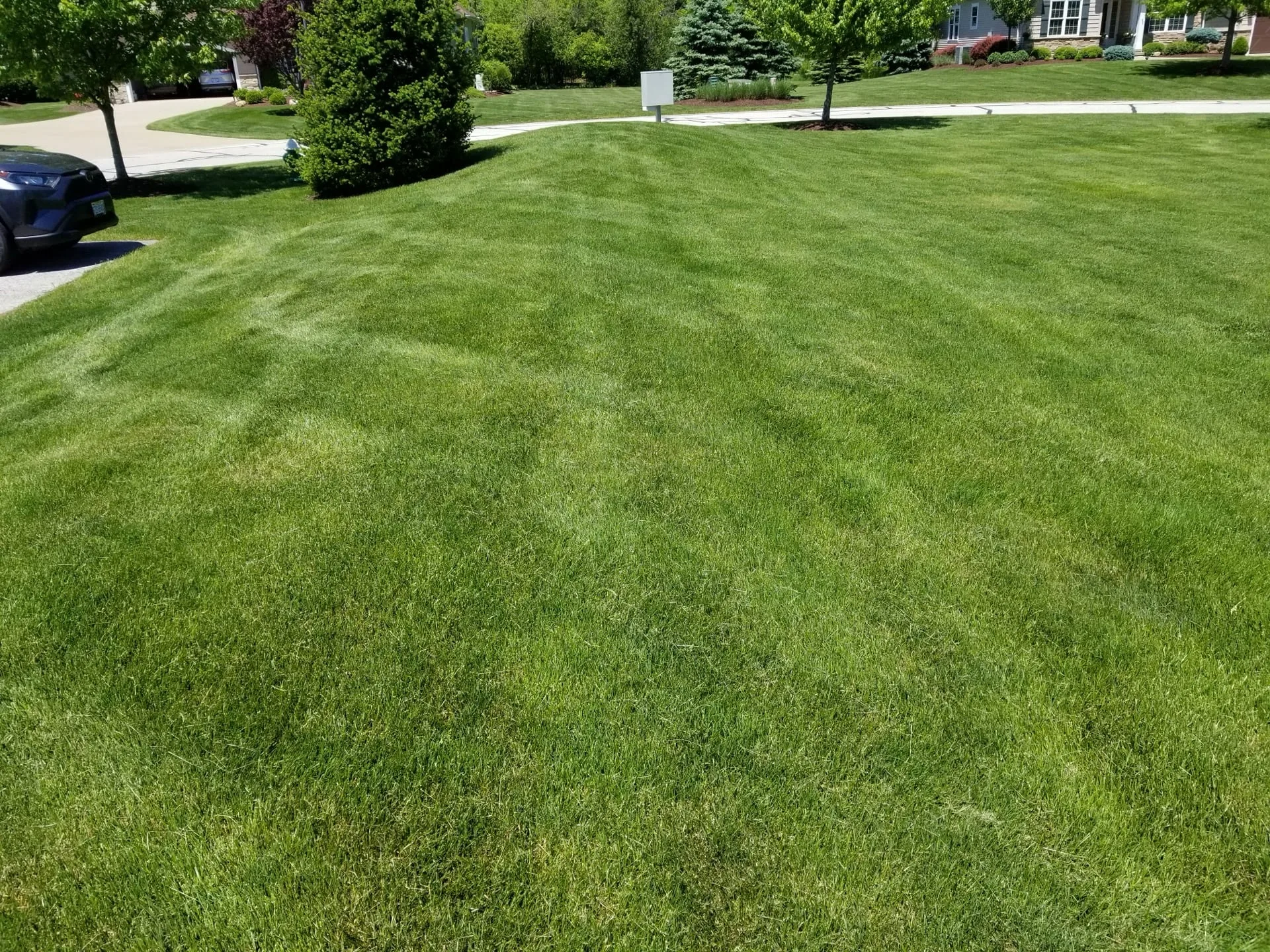
“Organic” gets used as a slogan more often than as a service description. At Portage Turf & Pest, organic-based lawn care means we lean on organic nutrient sources and soil-building practices where they fit the lawn, then still make product decisions from soil tests, grass type, and what the yard is actually doing. It is not a claim that every product in every situation is identical, and it is not a promise that weeds never appear.
We serve Northeast Ohio from Ravenna with lawn care, including our organic lawn program, plus soil testing and pest services when evidence calls for them.
Start with soil, not with a label on a bag
Clay lawns around Hudson, Kent, and Stow respond differently than sandy fill. A soil test tells you pH, nutrient gaps, and whether lime, sulfur, gypsum, or compost-style boosters belong in the plan. Browse soil test and boosters before you assume the lawn needs “more feed” of any kind.
Organic-based nutrition often works through soil biology and slower release. That can suit cool-season turf when roots need steady support. It does not erase compaction, shade, or a sprinkler that never reaches the fence line.
Organic-based does not mean ignore insects or disease evidence
Grubs, surface insects, and fungus still show up on Northeast Ohio lawns. An organic-based fertility program does not automatically answer a confirmed grub problem. Lift tests, bird feeding patterns, and spongy turf still deserve photos and a clear recommendation. See grub control when roots are the issue, and keep fertility language separate from insect evidence.
If fence-line insects and traffic are stacking, our notes on lawn insects along fence lines explain how to separate wear, moisture, and pests.
Water and mowing still do the heavy lifting
No nutrient source fixes a controller still set for April. Read how to water your lawn and adjust zones before you change products again. Sharp blades and steady height matter on tall fescue common in local subdivisions. Scalping a stressed lawn and then asking organic fertilizer to “green it up” wastes a season.
Core aeration belongs in the conversation when water runs off packed clay. Organic matter helps over time; aeration helps water and air reach roots now.
What the program should spell out in writing
Ask which applications are organic-based, which situations might still use a different product, how soil tests guide the year, and what success looks like on your grass type. Bundled lawn and pest plans should still separate fertility visits from perimeter pest visits so you know what each stop is for.
Compare program options in our lawn and pest bundle comparison when you are weighing combined service against a la carte visits.
What organic-based does not claim
It does not claim a weed-free lawn by midsummer with no other work. It does not claim that every insect situation has an identical product path. It does not replace aeration on compacted clay or ignore a broken zone that never reaches the south fence.
Those limits are useful. They keep the program honest when a neighbor promises a miracle bag. Your lawn still needs mowing height, water depth, and evidence before the next product decision.
How a typical season is sequenced
Early season often focuses on soil conditions and feeding that supports root growth as clay warms. Midseason watches heat, watering, and weed pressure. Late season can emphasize recovery and soil support before winter. Exact products and timing still follow the grass type and the test results, not a national calendar printed for another state.
If you also want perimeter pest service, keep those visits labeled separately even when one company handles both. Fertility notes and pest notes should not blur into one vague “yard visit.”
Talking with the technician
Bring last year’s problems in plain language: thin shade strip, crabgrass along the drive, soggy side yard, pet areas, or a fence line that browns first. Ask how the organic-based applications address those spots and what still needs cultural fixes. A good answer names soil, water, and mowing before it names a product.
Households near Ravenna and surrounding Portage County towns can also ask how lake-effect timing shifts spring warmth on their block compared with a map pin alone.
Shade, pets, and high-traffic corners
Organic-based feeding will not turn a deep shade strip under spruce into a sunny fairway. It can support denser turf where light and water already allow grass to compete. Tell us about dog runs, kids’ play corners, and the side yard that stays wet after every storm so expectations match the site.
Pet urine spots and compaction from daily paths need cultural fixes alongside any fertility plan. If those corners are your real complaint, say that first. Product choice is secondary to traffic and moisture patterns on Northeast Ohio clay.
Comparing quotes without getting lost
When you compare companies, ask what “organic” means in their paperwork, how soil tests are used, and what happens when a pest or disease shows up midseason. Vague language is a warning. Clear scope is the goal. Portage Turf would rather define the lane than win a bid on a word that means different things to different crews.
What to send before you enroll
Send recent lawn photos, last soil test if you have one, irrigation notes, pet or play constraints, and if the organic-based fertility program should be the default. Contact Portage Turf & Pest when you want organic-based lawn care defined by soil and evidence, not by marketing fog.