
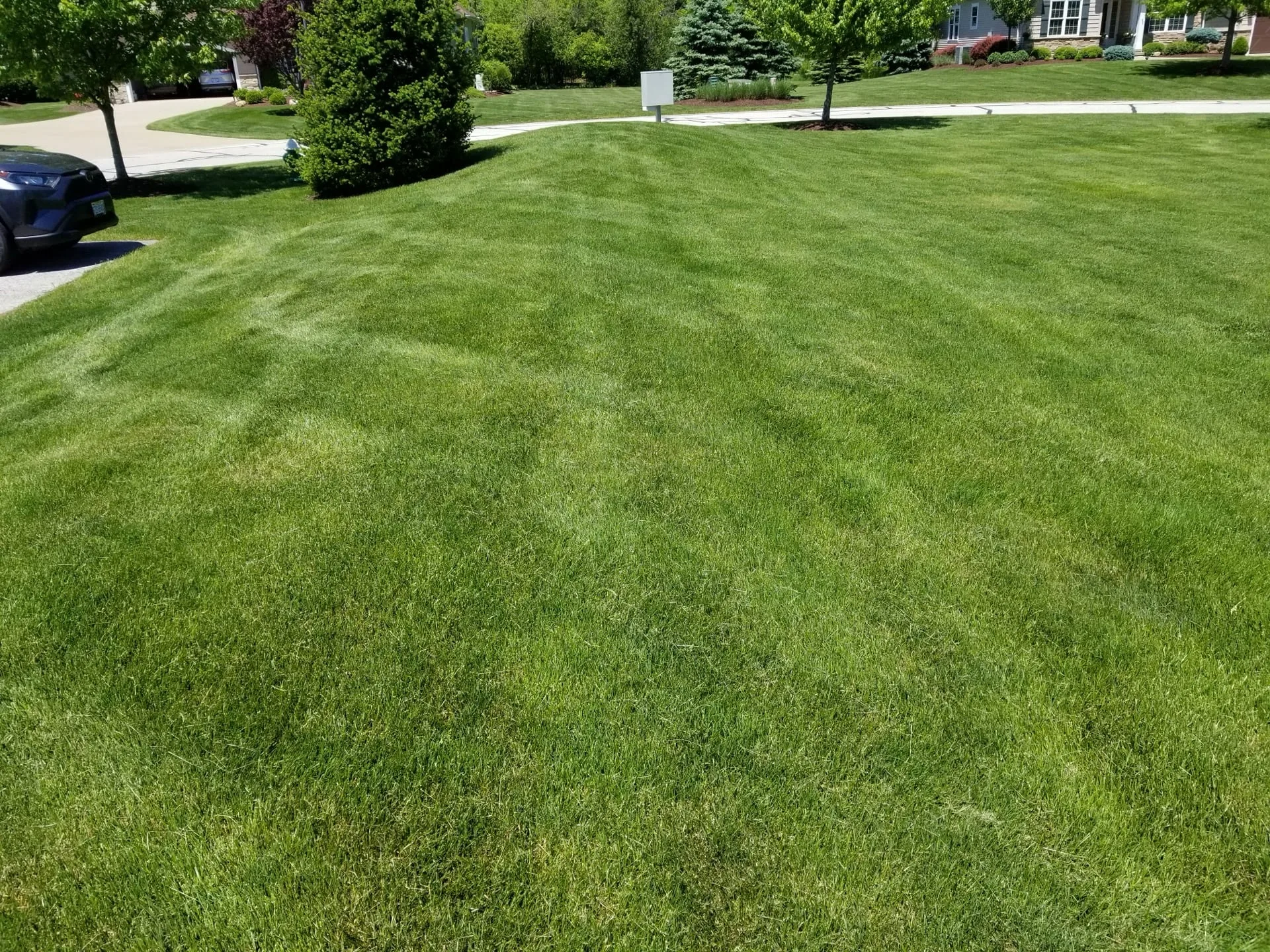
If your grass turning brown has you dragging out the sprinkler again and again, you’re not alone. The frustrating part is simple: brown grass does not always mean dry grass, and adding more water can actually make the real problem worse.
Why grass turns brown even when you’re watering
A lawn can turn brown for a handful of very different reasons. Sometimes it’s short on water. Sometimes it’s protecting itself from heat. Sometimes the roots are struggling in packed soil, getting eaten by grubs, or dealing with disease. That’s why random fixes usually waste time and money.
Here’s the thing: the lawn is giving clues. The trick is figuring out whether your grass is dormant, damaged, diseased, burned, or under attack before you change the whole routine.
Brown grass isn’t always dead
Brown grass can be dormant, stressed, or dead, and those are not the same thing. Dormant grass is alive but conserving energy, kind of like a phone switching into low power mode during a brutal hot stretch. Stressed grass is still growing, just poorly. Dead grass is done, and no amount of water brings it back.
That distinction matters because panic-watering a dormant lawn will not always wake it up, and it definitely will not fix roots damaged by insects or fungus. In northeast Ohio, cool-season lawns often hit rough patches in summer, especially after a hot, dry spell. Brown doesn’t automatically mean ruined.
Start with a quick check before you change anything
Before changing sprinklers, buying products, or assuming the worst, take five minutes and inspect the lawn. A quick check tells you more than the color alone ever will.
Try the screwdriver test
Push a screwdriver into the soil where the lawn looks brown, then try the same thing in a greener area. If the screwdriver slides in fairly easily, the soil still has some workable moisture. If it feels like you’re jamming it into a gravel driveway, the ground is dry, compacted, or both.
Hard soil means the roots are stuck in packed ground that water struggles to penetrate. You can have a wet-looking surface and dry roots underneath. That’s one reason watering can feel useless. The water lands, sits, and never really gets where it needs to go.
Tug on the brown grass
Grab a small handful of brown grass and pull gently. If it stays anchored, the issue is more likely heat stress, dormancy, mowing damage, or watering habits. If it comes up easily, roots may be damaged by grubs or disease.
That loose-carpet feel is a big clue. Healthy turf should resist a light tug because the roots are holding it in place. If it lifts too easily, stop assuming the problem is just summer heat.
Look at the shape of the damage
The pattern matters. Large faded areas often point to drought stress, compacted soil, or uneven watering. Circular patches or rings can suggest fungus. Small repeat spots can come from dog urine, fertilizer burn, mower scalping, or a sprinkler that keeps missing the same spot.
After a hot July week in Akron, ring-shaped browning that seems to spread fast is worth noticing. Shape tells a story.
The most common reasons your grass is turning brown
Once you look past the color alone, a few causes show up again and again.
Watering too often, too lightly
More water is not always better. In fact, frequent shallow watering trains roots to stay close to the surface, where heat dries them out faster. That creates a lawn that seems thirsty all the time.
Deeper, less frequent watering encourages roots to grow down where moisture lasts longer. Think of it like teaching the lawn to reach into the pantry instead of waiting for snacks on the counter. A lawn with shallow roots can turn brown quickly, even when you water often.
Heat stress and summer dormancy
Most lawns in northeast Ohio are made of cool-season grasses. Those grasses prefer spring and fall. When summer turns hot and sticky, growth slows and the lawn can brown out even if you’re doing a decent job watering.
Dormancy is a survival response, not always a sign of death. The lawn is basically pressing pause to protect itself. If the crown, the growing point at the base of the plant, is still alive, the grass can recover when temperatures ease up and conditions improve.
Soil compaction and poor drainage
Compacted soil squeezes out the spaces where water, oxygen, and roots are supposed to move. Poor drainage creates a different but equally frustrating problem: too much water sitting where roots can’t breathe.
That’s why a lawn can look wet and still struggle. It’s a lot like overwatering a houseplant in a pot with no drainage holes. The surface says “plenty of water.” The roots say otherwise.
Mowing too short or with dull blades
Cutting the lawn too short, often called scalping, exposes soil to more heat and sun. Moisture disappears faster, roots weaken, and recovery gets slower. Then the brown color sets in and sticks around.
Dull mower blades make things worse. Instead of clean cuts, the grass gets torn. Those ragged tips dry out and turn brown, which can make the whole lawn look unhealthy even when the roots are still alive.
Brown patches that point to pests, fungus, or lawn burn
Some brown spots come from stress. Others point to something more specific, and those need a different fix.
Grubs and other root-feeding insects
Grubs feed below the surface on grass roots. One of the clearest signs is grass that lifts easily, almost like loose carpet. You may also notice animals scratching or digging for a snack.
If the lawn is getting water but still declining fast in patches, root-feeding insects are worth checking for. Water cannot save grass when the roots are being eaten.
Fungal diseases like brown patch
Lawn fungus is simply disease that develops when temperature, moisture, and humidity line up in its favor. Brown patch often shows up as circular areas of thinning or brown turf, sometimes with a darker outer edge or a faint smoke-ring look early in the day.
The catch is that overwatering can help feed the problem. Wet leaves overnight, heavy humidity, and soggy soil create perfect conditions for disease to spread. If the damage has that circular pattern and seems to move quickly, fungus should be on the list.
Fertilizer burn and weed killer stress
Too much fertilizer can scorch grass, especially in hot weather. So can weed treatments used at the wrong time. Instead of helping, the lawn gets chemically stressed and starts browning.
This usually shows up after an application, often in streaks, patches, or spots where product overlap happened. If the timing lines up, don’t ignore that clue.
Dog urine and other concentrated spots
Dog urine usually creates small brown spots with darker green grass around the edges. That dark ring happens because a little nitrogen can green up grass, but a concentrated dose burns it.
Those spots tend to be smaller and more repeated than drought damage. If the same type of patch keeps showing up in predictable places, that’s a strong hint.
How to tell which fix your lawn actually needs
The goal is not to throw every product in the garage at the problem. The goal is to match the symptom to the right response.
If the soil is dry and hard
Start with deeper watering, not more frequent watering. Then deal with the compaction issue. If the soil stays stubbornly packed, aeration can help open it up so water and oxygen actually reach the roots.
If the lawn is wet but still browning
Look at drainage, overwatering, or fungus. Soggy soil can starve roots of oxygen, which means the lawn struggles even while sitting in moisture. More water will not solve that.
If the grass pulls up easily
Focus on root damage. Grubs and severe disease move to the top of the list when grass lifts with very little effort. This is the moment to stop guessing and inspect closer.
If only certain patches keep returning
Recurring spots usually point to a local problem, not a whole-lawn problem. Pet traffic, shade, runoff, compacted corners, or weak sprinkler coverage often explain why the exact same patch keeps going brown.
What you can try now to help grass recover
Recovery starts with a few smart adjustments, not a shopping spree.
Raise the mowing height
Slightly taller grass shades the soil, helps it hold moisture, and protects roots during summer stress. For common cool-season lawns, a higher mowing height usually looks better and performs better.
Water less often but more deeply
The goal is deeper roots, not constantly damp soil. Watering early in the day helps more moisture soak in before the heat kicks up, and it reduces the time grass blades stay wet overnight.
Hold off on extra products until you know the cause
Here’s the thing: piling on fertilizer, fungicide, insect control, and weed killer all at once can make brown grass worse. If the cause is compaction, dormancy, or mowing damage, the wrong product does nothing except add more stress.
Repair damaged areas after the stress passes
Once the underlying issue is fixed, dead areas can be reseeded or patched. Truly dead grass will not green back up on its own, so repair comes after diagnosis, not before.
When brown grass is a sign you need professional help
If the damage is spreading, keeps coming back, or still looks bad after fixing watering and mowing habits, the lawn probably needs a closer look. Widespread browning, repeated circular patches, loose turf, drainage problems, or signs of grubs and fungus usually mean the issue is deeper than a simple dry spell.
Start with one thing this week: do the screwdriver test before changing anything else. That small check often tells you whether your lawn needs more water, less water, or a completely different fix.
- Disclaimer: This article is for general informational purposes only. It is not professional advice, a quote, or a service agreement. Conditions at your home or property may differ; contact a qualified professional for an on-site evaluation before making repair, safety, or spending decisions.