
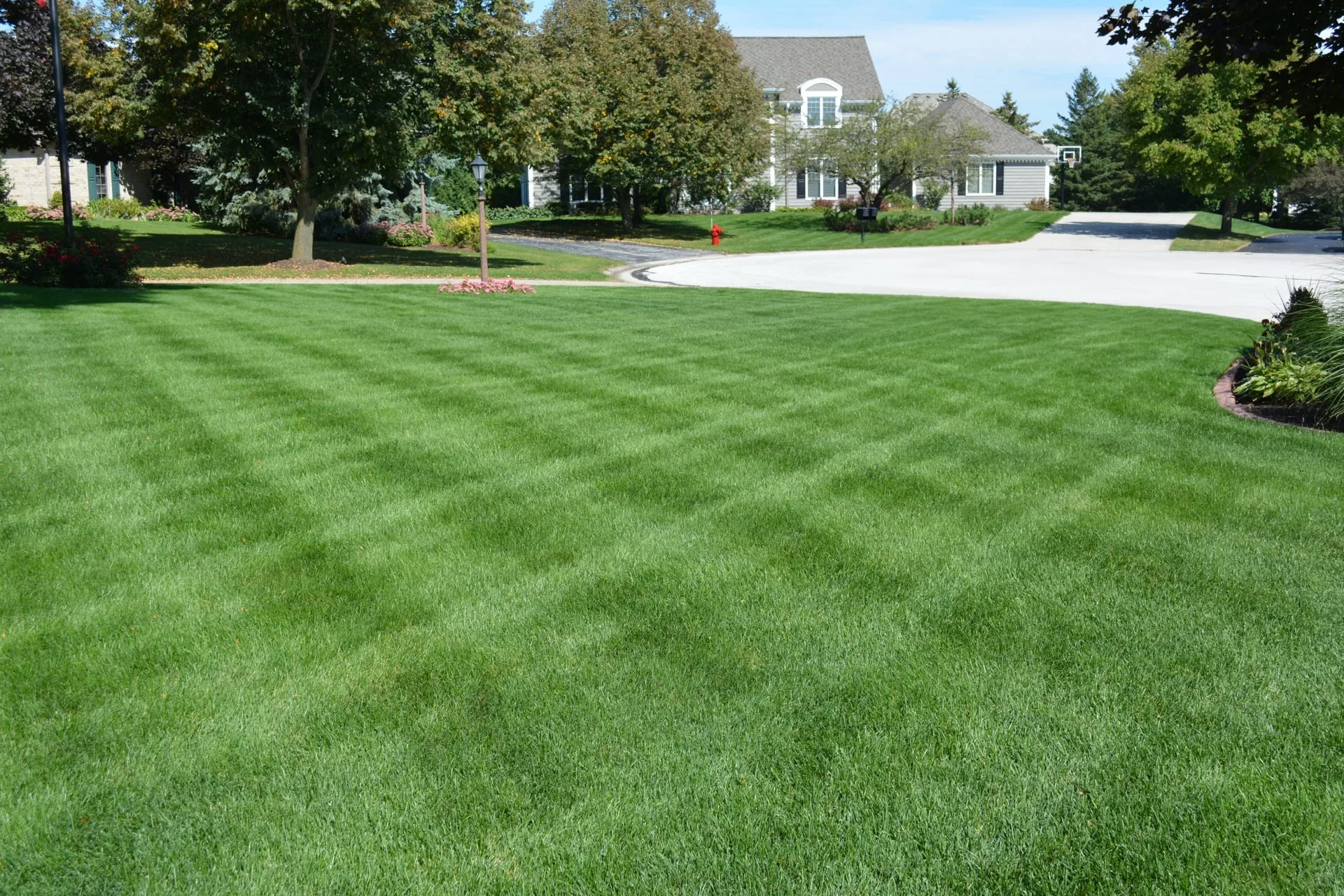
April rains do not invent new problems. They broadcast the ones you forgot about under snow. A strip that always melts last, a walk edge where gutters dump, a trampoline ring that never dries: water shows you the map in blue green grass, mossy corners, or bare mud where kids cut the same shortcut. Northeast Ohio clay makes that map dramatic in Ravenna, Solon, Streetsboro, and across the Akron corridor. This article helps you read the pattern without turning every puddle into panic, and it ties honest drainage thinking to the lawn habits we already describe in soggy lawn after snow melt and April into May lawn rhythm.
We are not a plumbing company, yet we work beside homeowners who are tired of fighting the same soft corner every spring. When grading, downspouts, or subsurface drains need attention, we will say so clearly. When cultural practices and aeration timing can help, we will outline that path too. Contact Portage Turf and Pest or call (330) 296-8873 for a look tied to your property in Kent, Streetsboro, Solon, or other towns on areas.
Walk the lawn within twenty four hours of a real rain
Bring chalk flags or old tent stakes. Mark where water sits for more than half a day, where runoff crosses the walk, and where grass looks happy even when nearby beds look drowned. Take photos from the same spots after three sunny days. If the low zone never improves, you likely have a drainage project, not a fertilizer shortage. Note tree species and roof valleys that pour extra volume. April leaves are still thin, so May can look different once canopies mature. Your map is a living document you can share when you ask about lawn care programs.
Compare standing water zones to how you mow. If you always rut the same wet lane near the gate, compaction and grade may be telling one story together. Our soil compaction and core aeration piece explains when mechanical relief helps pore space without promising to drain a bowl that needs regrading.
Separate surface flow from soil percolation
Some yards shed water quickly across the surface yet still hold water below because clay pores are full. Others perk fine once water moves off compacted paths. Aeration can help certain compaction cases yet cannot replace a pipe that needs daylighting. If you are unsure, ask for a professional read before you rent heavy equipment on a wet weekend. Guessing costs more than a conversation when the same corner fails two April storms in a row.
Our soil test and boosters conversation often pairs with drainage talks because salt from winter walks and pH swings show up in the same spring window. Numbers beat color guesses when you are deciding whether lime belongs in the plan alongside drainage fixes. Organic and conventional feeding both perform better when water is not sitting on leaves overnight after application, so tell your technician where puddling happens.
Lawn care choices that help without fairy tales
Taller mowing reduces splash stress on crowns and shades soil modestly. Less foot traffic on soft ground reduces compaction while roots are still fragile. Seeding belongs on a calendar that matches sun and airflow, not on the first dry Tuesday out of frustration. If moss is winning a pocket, shade and moisture are driving the story; scraping moss without changing light or grade buys a short reprieve you will fight again in fall.
If you are on fertilization, spring visits are timed to growth and label windows, not to dry soil fantasies. Feeding grass that cannot take traffic yet is a different plan than feeding grass that simply needs less water. Read how to water your lawn when irrigation overlaps low spots and keeps nights wet along the same edge. Night sprinkles on clay often extend the problem you thought fertilizer would fix.
How wet edges change mowing and organic timing
Soft soil and sharp mowing do not mix. If you must cut, follow proper mowing height and wait for firm afternoons instead of heroic passes that etch ruts. Wet edges also change when organic lawn care or conventional applications make sense; biology and chemistry both need contact without puddles diluting or washing product. Tie those habits to April organic lawn care when soil warms if you are comparing natural programs this spring.
When growth outpaces your calendar in late April, read late April when lawn growth outpaces mowing so you are not compounding wet lanes with double cutting on saturated clay. Mowing is a moisture decision as much as a cosmetic one in May.
When to escalate beyond the lawn crew
Call a drainage contractor when foundations, crawl spaces, or basements take water, when erosion cuts under walks, or when swales need regrading across property lines. Call us when grass fails repeatedly in the same arc despite reasonable fixes, when you want aeration and overseeding aligned to realistic sun, or when you need a clear plan before you invest in new topsoil. We will not sell you seed on a bowl that needs grade work first.
Bring photos of downspout splash, walk salt scars, and where dogs or equipment always cross when soil is wet. Note which neighbors uphill might be sending extra runoff your way. For perimeter comfort along wood lines that stay damp, tick smart yard edges and mosquito and tick programs may belong in the same season as drainage honesty, especially if family traffic crosses wet turf to reach the patio.
Turning the map into a calmer season
Water truth is useful data. When you map it honestly, the rest of the season gets calmer. Stack lawn work in an order that respects moisture: fix flow where you can, ease compaction where it helps, seed when sun and airflow support establishment, and feed when growth and firm soil agree. Read spring fertilization guide for how feeding fits the full year, and why choose us when you want a team that says no to shortcuts that waste your budget.
When two April storms tell the same story, contact Portage Turf and Pest with your stake map and photos. We help Northeast Ohio lawns stay on a steady arc through May without promising a magazine cover on soil physics will not allow. The goal is a plan you can repeat, not a single heroic weekend that fades when the next warm front arrives.
What your map should include by May
Good maps are boring on purpose. Date each rain event, mark how long standing water lasted, and note whether the grass in that bowl greened faster or slower than the rest of the lot. Fast green in a wet pocket often means shallow roots enjoying surface moisture, not deep recovery. Slow green on a slope that dries in a day may mean compaction or salt, not hunger.
Bring the map to any conversation about aeration or overseeding so timing matches airflow and sun, not frustration. May canopies change how much rain reaches the ground; update the map once leaves are full if the same corner still misbehaves. Honest records turn April storms into useful data instead of annual arguments with the lawn.