
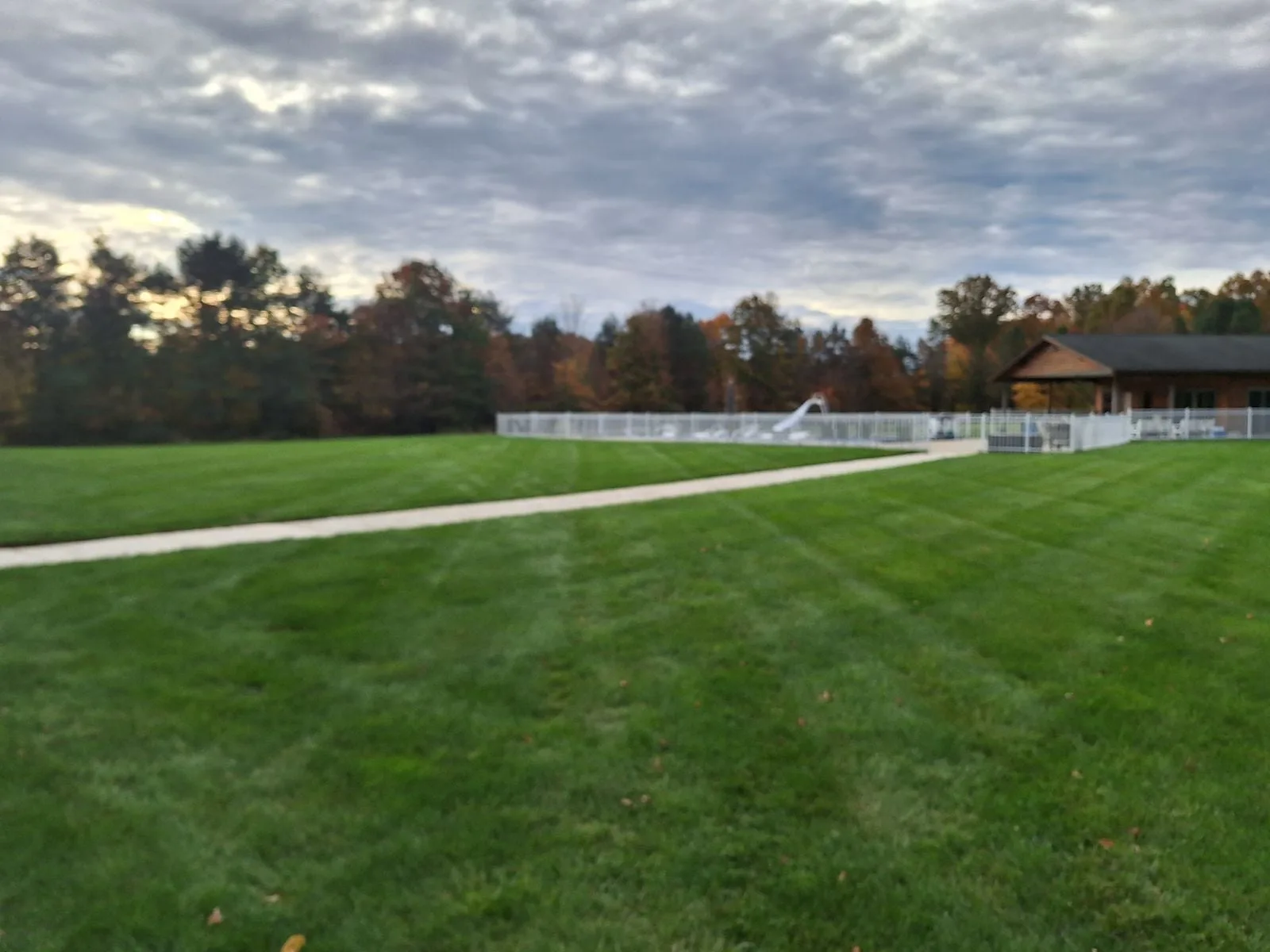
By the middle of July, most cool-season lawns around Kent, Streetsboro, and Stow have made a decision the homeowner has not: they have started to go dormant. Kentucky bluegrass and tall fescue evolved to survive heat by slowing down, pulling energy into the crown, and letting the blades fade to tan. This is a survival strategy, not a death sentence. The problem in Northeast Ohio is rarely the heat itself. It is the accidental watering pattern that keeps waking the lawn up and putting it back to sleep, week after week.
That yo-yo cycle is the quiet reserve-drainer most people never hear about. Every time a lawn greens up after a thunderstorm and then browns again three days later on packed clay, the plant spends stored crown carbohydrates to push new growth it cannot sustain. Do that four or five times across July and August and a lawn that could have slept safely instead runs its tank dry. This post is about the one decision that prevents it: pick a lane and stay in it.
For the mowing-height and coverage side of summer stress, our sustained heat mowing and watering guide is the companion read. This one is narrower on purpose: dormant or dying, and what your July watering choice does to the answer.
What dormancy actually is on Northeast Ohio clay
Dormancy is the plant shutting down top growth to protect the crown, the small living structure at the soil line where new leaves and roots originate. Blades brown, but the crown stays alive underground, waiting for cooler, wetter conditions in late August or September to regrow.
On Northeast Ohio clay this looks different than it does on sandy soil. Clay holds afternoon heat and sheds light rain before it reaches the root zone, so lawns here can look drought-stressed even when the calendar says rain fell this week. A tan lawn on firm clay in mid-July is usually a healthy plant making a smart choice, not a dead one.
Lake-effect thunderstorms complicate the read. A single heavy cell can dump half an inch on your street and skip the block over. That inconsistent moisture is exactly what triggers the wake-sleep-wake pattern that wears a lawn down.
The one decision: commit to green, or commit to sleep
There are two safe strategies for a cool-season lawn in mid-July. Both work. The danger lives in the middle, where sporadic watering does neither well.
- Commit to green. Water deeply and consistently, roughly one to one-and-a-half inches per week including rain, delivered in one or two soakings that reach several inches down. Once you start this, you keep it up through the heat. You are now the lawn’s water supply.
- Commit to sleep. Let the lawn stay cleanly dormant and give it only a survival soak, about a quarter to half an inch every two to three weeks. That is enough to hydrate the crown without triggering a full, expensive green-up the plant cannot hold.
What burns reserves is the accidental third option: a light sprinkle here, a skipped week there, a thunderstorm, then nothing. Pick the strategy that fits your summer, your water bill, and your travel schedule, and hold it. Our how to water your lawn guide covers depth and timing that fit clay better than a daily timer guess.
The tug test: dormant crowns hold, dead crowns let go
You do not have to wonder whether tan turf is sleeping or gone. Walk to a brown patch and grab a handful of blades firmly, then pull straight up.
- Dormant: the crown resists, roots hold in the soil, and the base of the plant near the soil line still shows a firm, whitish crown even when the blades are tan.
- Dead: the plant pulls free with almost no resistance, and the crown at the base is brown, mushy, or brittle and crumbles.
Check several spots, not one. Sunny mounds and thin traffic lanes go dormant first and may hold more dead crowns than the shaded, open lawn. If most of the lot tugs firm, you have a sleeping lawn and a watering decision, not a reseeding project.
Why panic seeding in July usually fails
When a lawn browns, the instinct is to throw down seed. Mid-July is one of the worst windows for it on Northeast Ohio clay. Hot soil dries the seed bed between waterings, weed competition peaks, and new seedlings have no root depth to survive the next heat spike.
The better move is to mark the thin and dead zones now and plan the real repair for late summer, when soil cools and moisture returns. Overseeding paired with core aeration in that window beats emergency seed almost every time. If compaction is driving the thin lanes, read soil compaction and core aeration before you buy a bag.
Fertilizer and mowing during the sleep window
Do not push nitrogen on a dormant or heat-stressed lawn. Feeding forces growth the plant is trying to avoid and can scorch tips on dusty clay. Structured fertilization belongs in the growth windows on either side of peak summer, not in the middle of a dormancy decision.
Keep the mower high, near three inches, and cut only when there is growth to remove. A dormant lawn barely grows, so mowing slows down too. When you do mow, sharp blades matter; dull blades shred tan tips into a gray cast that looks like disease. For the full height logic, see how to choose the best mowing height.
Watch the traffic lanes and grub pockets separately
Two things can masquerade as dormancy and deserve their own read. Worn paths from dogs, mowers, and patio traffic compact clay and brown faster than the open lawn; those are traffic and compaction problems, not whole-lawn dormancy. And spongy turf that lifts like carpet, often with skunk or bird digging nearby, points to grubs rather than heat.
If a patch tugs free in sheets and the soil beneath is loose with white larvae, that is a grub control conversation, not a watering one. Keep these diagnoses separate so you do not water a grub problem or treat a dry arc as an insect.
When to call
Call (330) 296-8873 or contact Portage Turf & Pest when the tug test comes back mixed, when thin lanes and brown open turf compete in the same week, or when you want a late-summer recovery plan built before September. Bring photos from morning and late afternoon, your watering days, and notes on which zones browned first.
Our lawn care programs are built around real Northeast Ohio clay and lake-effect rain, not a national calendar. A tan July lawn is often a patient lawn. The trick is deciding whether you are watering it or letting it sleep, and then not changing your mind every thunderstorm.