
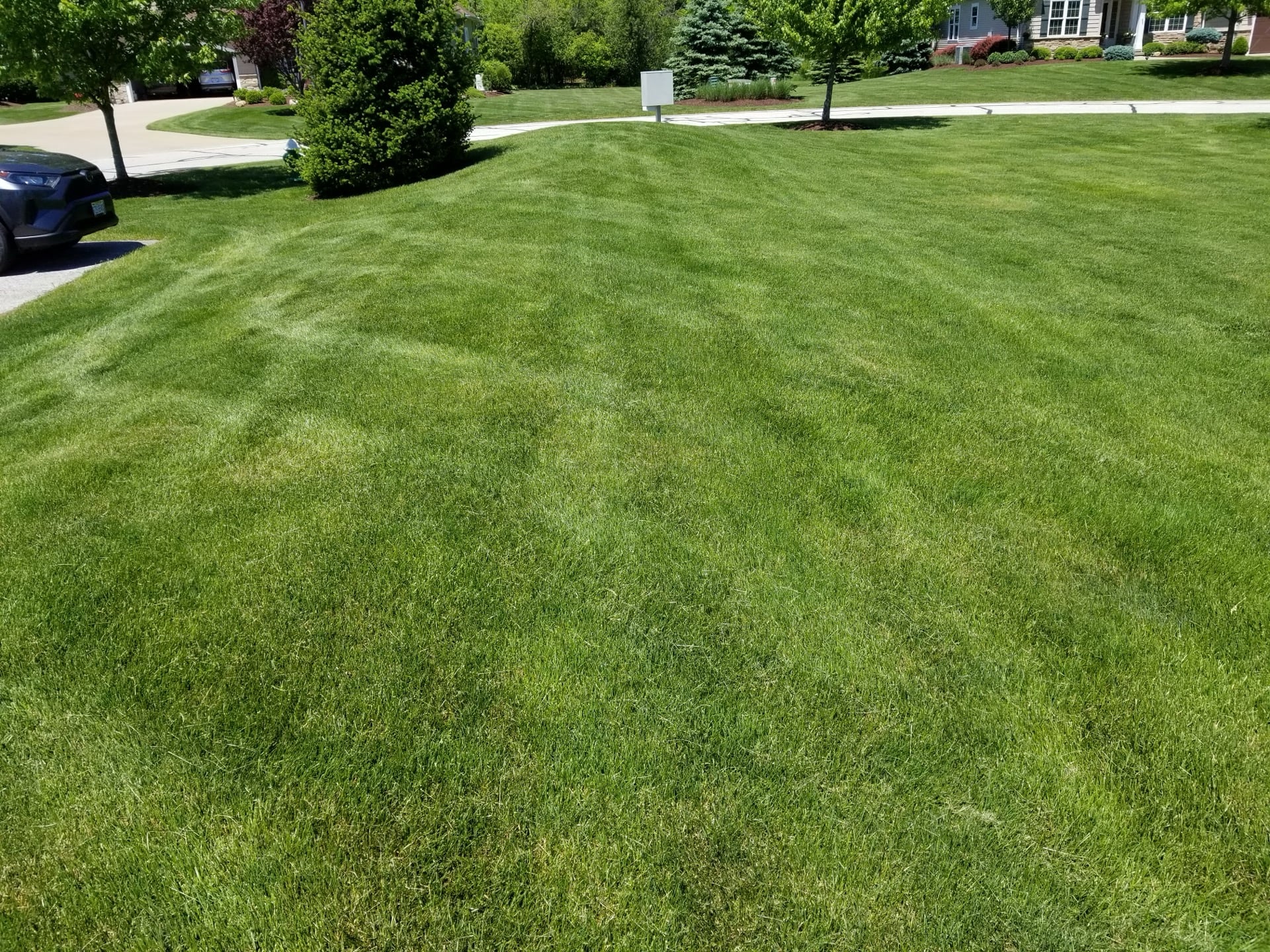
Your mower stripes look sharp from the street, but the lawn still feels wrong underfoot. Water sits on the surface longer than it used to, fertilizer seems to flash green and fade, and the grass never gets that springy feel you expect after rain. Those patterns often trace back to soil compaction, which is simply soil particles pressed together so tightly that air, water, and roots have trouble moving through the top few inches. In Northeast Ohio, clay rich soils, repeated freeze and thaw cycles, pets, play sets, and the same mowing paths week after week all contribute. Compaction is not a moral failure; it is physics. The useful question is whether core aeration, which pulls small plugs of soil out of the lawn to open channels, belongs in your year.
This article stays focused on turf. It does not replace a soil test, and it does not promise a single cure for every thin spot. It explains how we think about compaction alongside services you can read about on this site, including core aeration, seeding and overseeding, and soil test and boosters.
What compaction looks like before you dig a hole
You will not always see a hard crust. Sometimes the symptoms are subtle:
- Slow soak: Irrigation or light rain runs off or puddles instead of entering the soil at an even pace.
- Shallow roots: Grass pulls up easily in high traffic lanes because roots never anchored deeply.
- Weeds that love hard ground: Some annual grasses and low growing weeds tolerate compaction better than desirable turf.
- Thin strips along paths: The same route to the shed, trampoline, or swing set wears down faster than the rest of the yard.
Those signs overlap with other issues, including too much shade, pet urine patterns, or insect damage, so we treat them as clues rather than proof. Where history and soil type suggest compaction, pulling plugs through aeration is often the mechanical reset that makes everything else work better.
Why our climate matters
Cool season lawns around Ravenna, Akron, Hudson, and Kent grow most vigorously in spring and fall. Summer heat already stresses them. When the root zone is tight, summer dormancy hits harder and fall recovery takes longer. Spring can fool you with a flush of top growth while roots stay shallow, which is one reason we tie nutrition timing to real growth and soil readiness, similar to the thinking in our spring guide to lawn fertilization and early spring fertilization timing.
Aeration is not scheduled because the calendar says May. It is scheduled when the turf is actively growing enough to fill the holes, when soil moisture allows clean plug extraction, and when your goals include overseeding or better movement of water and air. That window often lands in spring or fall for our area, but your specific lot might differ from a neighbor’s.
How core aeration helps
Core aeration removes cylinders of soil and thatch and leaves them on the surface to break down. The open holes:
- Give roots a path to spread sideways and downward
- Help water move past the thatch layer instead of sitting on top
- Improve seed to soil contact when overseeding follows
- Reduce the “concrete under the grass” feeling in high use lawns
It is different from shallow slicing or spikes that can press soil sideways and worsen a hard layer over time. If you want the full service description, read our aeration page and ask us how it pairs with your existing program.
Pairing aeration with seeding and culture
Mechanical openings do not replace seed where grass is missing. They set the table. After aeration, seeding or overseeding can land in the holes and grooves for better establishment than seed on a hard surface. Watering habits still matter; how to water your lawn explains the slow, deep rhythm that supports new roots.
Mowing height influences density too. Taller cool season turf shades soil and supports deeper roots, which is why we still point homeowners to proper mowing height even when compaction is the main complaint. Traffic paths may need a longer term plan, such as stepping stones or redirecting play, because aeration cannot erase physics if the same compacting force returns every weekend.
Soil chemistry is a separate lever
Compaction is physical. pH and nutrient balance are chemical. You can aerate and still see pale color if the soil needs lime or other adjustments. That is where soil test and boosters comes in. Tests tell us whether to feed the lawn you have or fix the base layer first. Guessing from leaf color alone often wastes product.
When to call us
If you recognize several compaction clues, want overseeding to finally take, or plan to level up watering and mowing this year, ask us whether aeration fits your timing. Contact Portage Turf and Pest or call (330) 296-8873. For the full lawn menu, start at lawn care services and read why choose us if you are new to how we build programs around local conditions.