
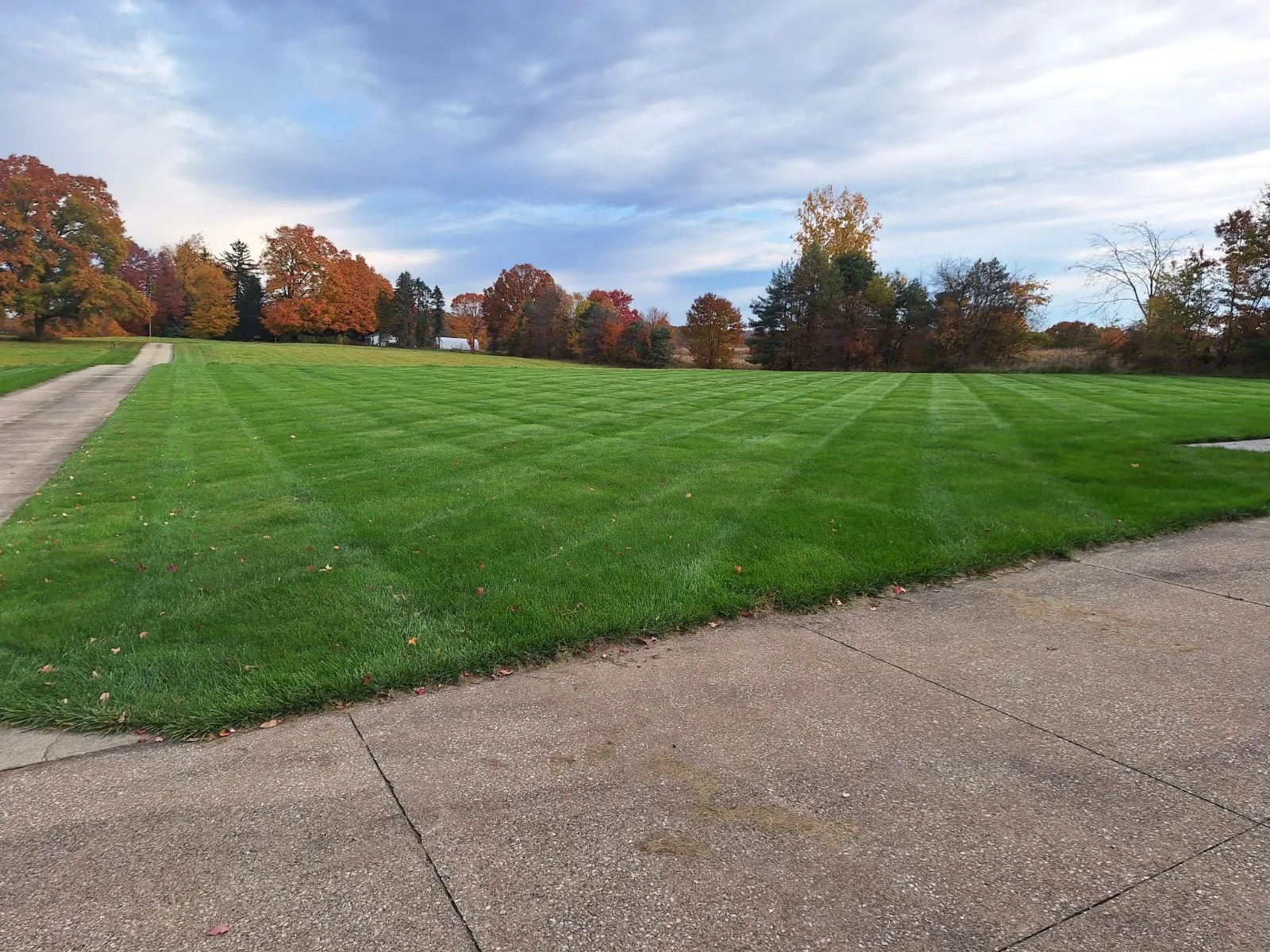
Sustained warmth after a wet spring changes how fence line turf reads fungus on Northeast Ohio lots. Downspout discharge that sheeted across north face strips during cool weeks now keeps leaf tissue wet for hours while afternoons stay hot. You walk the shaded band beside the house in Ravenna or Kent and cool season turf shows smoky rings, tan arcs, or thin margins that open lawn in full sun still hides from the street. None of that is instant neglect. It is splash physics, north exposure, and prolonged leaf wetness meeting warm nights on clay that never drained like sand.
Portage Turf & Pest helps homeowners read that overlap through lawn care and plant health programs without brochure panic. This narrative focuses on downspout splash and north face fungus on fence lines when sustained warmth follows spring saturation, not on graduation gate compression in our graduation week gate compression piece or fence line insects in Northeast Ohio fence lines and lawn insects before peak traffic.
Downspout discharge trains wet bands fungus favors
Extensions that terminate on turf instead of stone or splash blocks create a ribbon that stays damp long after open lawn dries. Walk every downspout outlet after a warm rain and note whether discharge crosses the fence line mowers trim around. Fix extensions that sheet across vent lines and bed toes before you increase controller minutes on the whole property.
Compare splash bands with April lawn low spots after rains when bowls repeat on the same clay profile. Properties in Stow and Cuyahoga Falls often carry north face geometry where splash and shade overlap on the same six inch strip.
North face shade prolongs leaf wetness through warm nights
North exposures that looked fine in spring now hold dew and splash together while afternoons pull on crowns in open sun. Circular patches with smoky margins after prolonged leaf wetness deserve a professional look through honest fertilization timing and disease conversations, not a third fungicide from the store without fixing splash first.
Photograph north face strips at breakfast and again after evening irrigation runs. Straight yellow bands along hardscape usually are splash and reflection first. Ring patterns on cool season turf in shade often trace to wetness duration, not traffic alone.
Irrigation overlap doubles wetness on fence lips
Spray heads aimed at foundation shrubs often soak the lowest fence line nightly while open turf still looks acceptable from the driveway. Run one zone at a time and watch where water lands for the full run cycle. Fix one mis aimed head before you change fertilizer on the whole lot.
Read May early moisture and mow signals when growth still outpaces your calendar through warm afternoons. Pair timer notes with how to water your lawn when skip days after radar belong beside splash fixes on clay.
Mowing height and clippings on humid north bands
Scalping north face strips before a host weekend removes blade tissue the plant needs to recover once splash is honest. Taller cool season canopies shade soil and support roots during warm afternoons on fence lips. Professional mowing service keeps height sane when clippings mat on humid nights beside downspouts.
Disperse mats when dry instead of leaving wet blankets on compressed soil. Compare mowing habits with proper mowing height when stripe cosmetics tempt a deep cut on strips that already stay wet from splash.
Grubs and disease disagree on the same fence lane
Spongy turf that lifts like carpet may still be grubs instead of fungus. Billbug injury can mimic drought on sunny gate strips while north face rings trace to wetness. Tug a handful of grass at the border of a thin strip. Roots that stay attached with uniform crown color suggest splash and overlap. Blades that pull away with chewed crowns point toward insects.
Explore grub control when chewed paths appear beside fence lines that also stayed wet through splash. Our late May lawn insect pressure on lake effect soils article pairs when several symptoms look alike from the kitchen window.
Organic soil biology at fence edges after saturation
Spring saturation changes how organic programs read north face strips through sustained warmth. Organic lawn care rewards honest splash fixes before feeding pushes soft growth disease favors on wet clay. Soil tests through soil test and boosters help when color drifted after a wet season and splash never moved off turf.
Compare cultural reads with introduction to healthy soil management when biology and splash share the same fence band. Coordinated programs beat panic products on strips that still receive downspout discharge every storm.
Perimeter moisture beside stressed fence turf
Thin turf near foundations often sits next to mulch lines ants already test on warm evenings. Pair turf notes with perimeter pest programs when activity concentrates where irrigation and splash keep soil soft beside the house. Mosquitoes breed in saucers and clogged gutters that share north face geometry with fungus bands.
Our vacation week lawn perimeter notes article supports when travel pulls you away from daily walks that usually catch splash problems early. Mosquito and tick control belongs in the call when biting pressure rises beside wet fence lips you noted on the same lap.
Tree and shrub airflow at north foundation lines
Entry shrubs that grew into rails reduce airflow on north face turf already wet from splash. Dormant pruning and deep root injection conversations belong beside irrigation fixes when woody plants shade fence strips that never dry. Light thinning that opens the interior often beats a heavy shear the week before traffic returns.
Explore plant health when foundation plantings look weaker than open lawn on the same address in Hudson. Airflow and honest water often explain mixed exterior pressure better than a third retail bag.
Practical checklist before you treat every ring as disease
Move downspout discharge off turf onto stone or splash blocks. Fix spray arcs that hit siding and fence lips nightly. Raise mowing on north bands that stay wet. Photograph rings at breakfast and after evening cycles. Note whether pattern follows splash, shade, or feet before you apply fungicide on strips still receiving discharge.
These habits support professional visits across Northeast Ohio. They do not replace a site walk when splash geometry and clay saturation need a mapped plan through sustained warmth.
What to send before we visit
Two photos of north face fence strips, one downspout outlet photo, your town, and whether irrigation ran in the last forty eight hours. Mention recent rain, smoky ring patterns, and any products applied this month through contact. Portage Turf & Pest serves Ravenna, Kent, Hudson, and nearby communities with programs built for real splash and real clay when downspout discharge and north face fungus stack on fence lines through sustained warmth after spring saturation.