
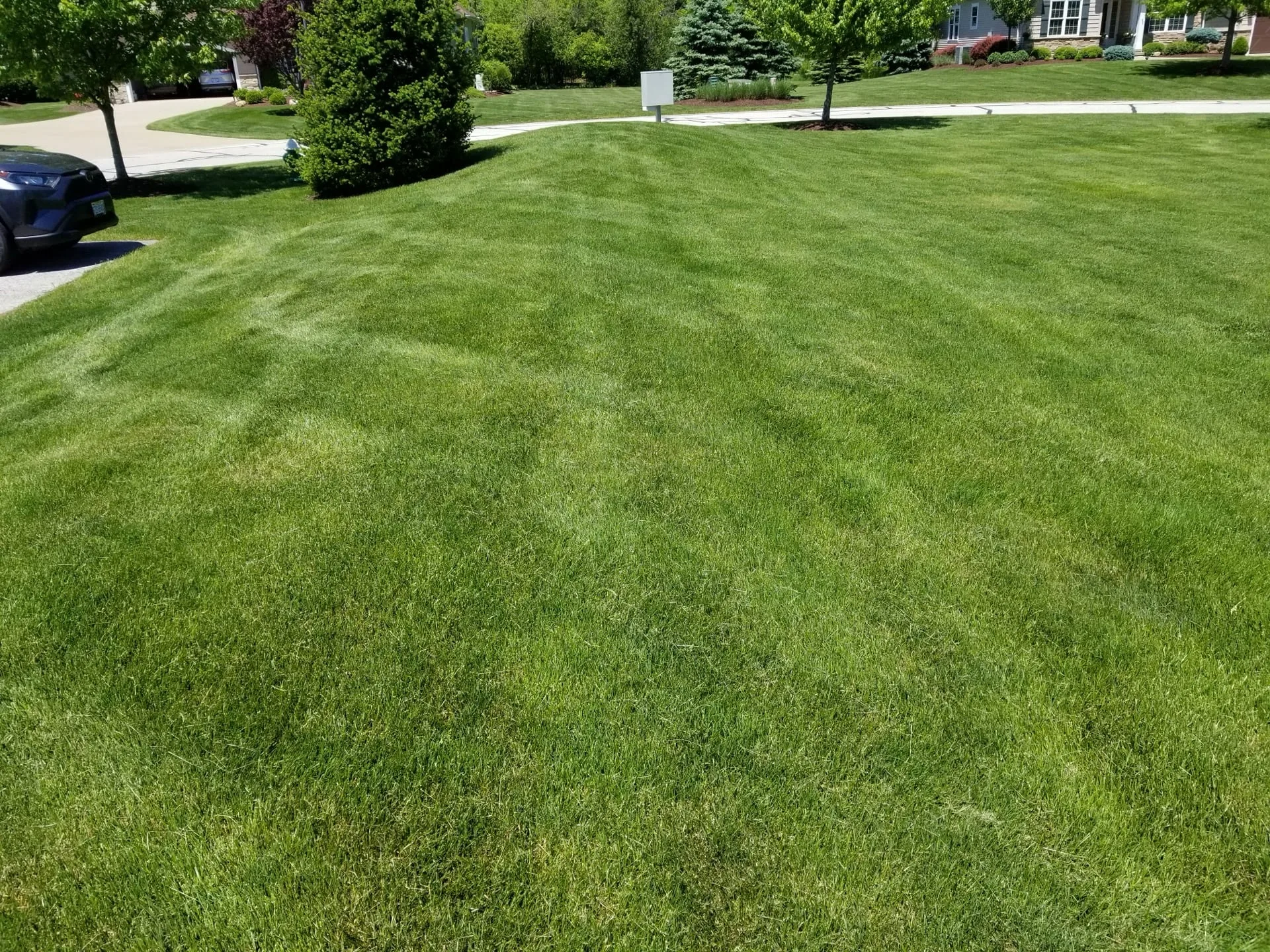
The first week your sidewalk feels warm at four in the afternoon, your sprinkler clock might still be set for spring. On Northeast Ohio clay around Hudson and Stow, that mismatch shows up as green center lawn and tan arcs beside fences — long before grubs deserve blame.
Tall fescue common in Kent subdivisions needs steady depth, not three extra minutes on every zone because one sunny south-facing area looked dry from the kitchen window. Portage Turf & Pest aligns watering with lawn care and pest control so you fix water before insects and wear stack on the same fence line.
Label sun and shade before you change run times
Walk the lot once at dusk after heads run and mark which sprinklers wet brick, which spray the fence, and which never reach the far side of the lawn. North beds beside the house stay moist on clay while open lawn dries faster than photos suggest.
Compare trouble areas only to similar sun exposure on your lot — not to a neighbor on sandier fill three blocks away.
Review how to water your lawn before copying peak summer habits from a warmer climate. Our spring fertilization guide explains how feeding pairs with moisture roots can actually use.
Fix head aim before adding minutes everywhere
A head throwing water on pavement while roots starve two feet away wastes water and confuses diagnosis. Adjust one zone, wait 48 hours, then check the same band in the morning.
Global run-time bumps usually flood shade while sunny areas still look stressed.
Schedule core aeration when water runs off packed soil beside walks instead of soaking in. Our soil compaction guide explains timing when clay warms but still holds moisture unevenly.
Separate dry soil from grub damage
Uniform tan beside a fence often traces to missed spray, not larvae. Spongy turf that lifts easily when grass is dry enough to walk is a different story worth photographing.
Browse grub control when lift tests and skunk dig marks support larvae on the same sun zone. Our late May insect pressure article helps separate fertilizer problems from watering gaps.
Mosquitoes follow the water you forgot to fix
Overlap that keeps clay cool and soft along spray edges also extends mosquito resting sites at dusk. Saucers, clogged gutters, and tarps beside play sets breed faster than most families expect on humid evenings.
Pair breeding-site cleanup with mosquito and tick control under integrated pest control programs. Read tick smart yard edges when woods border your lot.
Feed and treat weeds after water makes sense
Structured fertilization keeps nutrition aligned with moisture roots can use. Feeding dry crowns on clay burns fence areas you tried to save with extra water from the clock.
Crabgrass and goosegrass colonize dry worn paths before open lawn when spray never reached packed soil. Fix coverage before post-emergent weed treatments alone chase weeds that returned because water never matched traffic wear.
Working with Portage Turf before heat stacks
Wide shots plus close images of dry arcs beside walks, wet spots under downspouts, and overlap on patio edges save guesswork on the first visit. Note mower height and whether the dog wears the same diagonal every afternoon.
Contact Portage Turf & Pest or call (330) 296-8873 with controller photos and cookout dates so lawn and pest visits stack calmly on Northeast Ohio clay.