
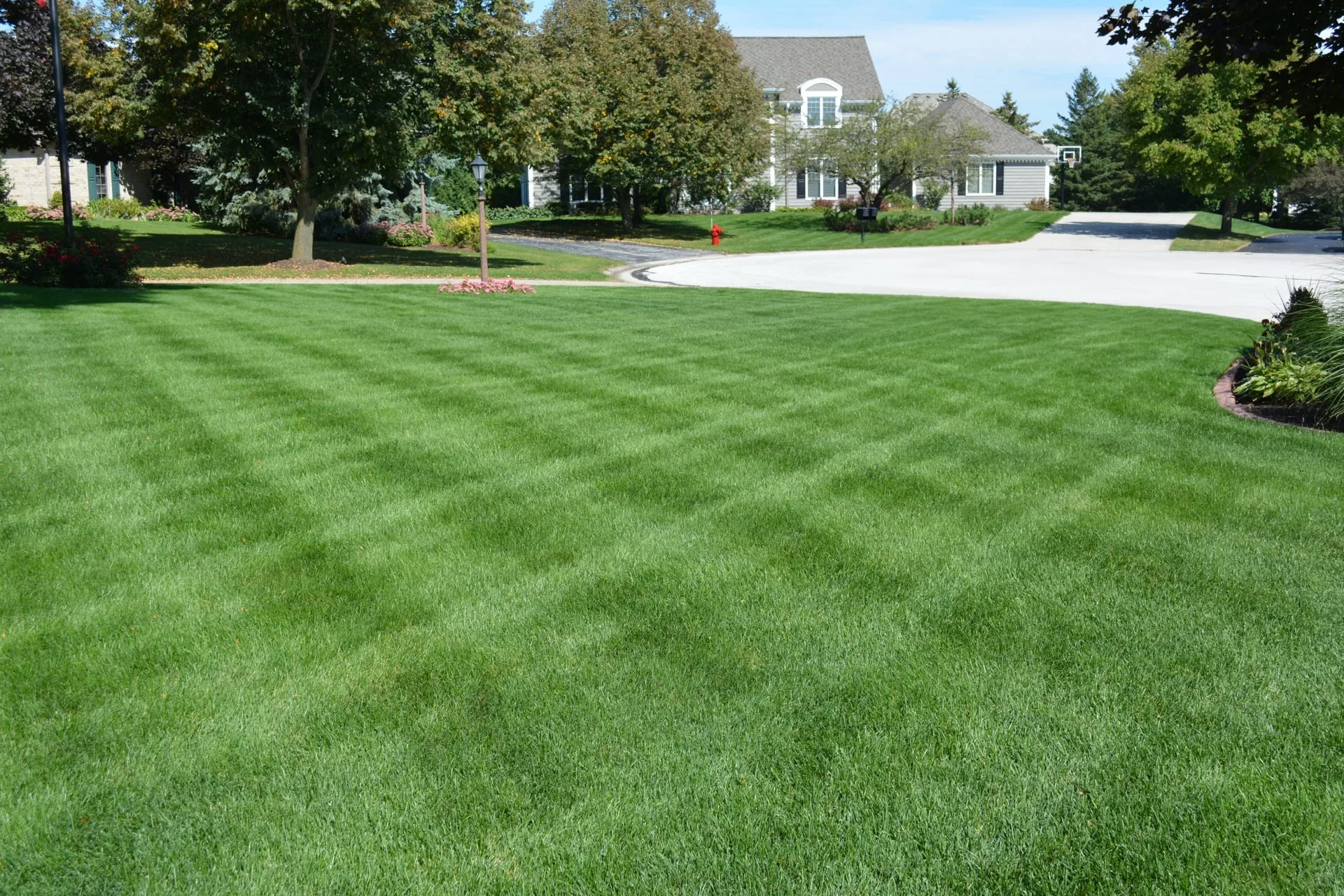
Late May is when cool season lawns in Northeast Ohio send mixed signals: soft soil at night, fast growth by afternoon, and calendars that add guests faster than you update the irrigation clock. If you are not sure whether to chase drainage reads, feeding, mowing habits, or biting pests first, this quiz gives a starting direction using only our own site pages. It is different from the May gathering lawn priority quiz, which focuses on party traffic and wear, and from the yard priorities quiz, which widens to beds and organic programs.
Nothing here replaces a site visit on your soil and shade. Use the result as a conversation opener, then call (330) 296-8873 or use contact with your town and any photos of low spots, pale strips, or patio edges.
What this quiz is trying to sort
Warm rain followed by warm sun is the classic late May pattern around Ravenna, Kent, and the Akron corridor. Grass grows fast while clay pockets stay wet, which makes ruts, pale strips, and puddling feel like one emergency when they often need different tools. The quiz asks which honest problem you would fix first if you had one dry week, not which worry is loudest on social media.
If your primary stress is how the lawn looks for guests rather than how soil feels underfoot, start with the May gathering lawn priority quiz. If you are still mapping standing water after April storms, read April lawn low spots after rains before you treat every wet corner as a feeding issue.
How to take the quiz
Choose the answer that fits most of your property right now. If two feel close, pick the one that would save you the most stress if it were handled before the next warm rain week. Walk the lawn once after dinner and once on a firm afternoon so you are not guessing from a single lunchtime glance.
The three questions below map toward wet edges, feeding and weeds, mowing and compaction, or mosquito and tick comfort near seating. Ties are common when downspouts, dog paths, and patio edges all misbehave on the same lot.
Late May lawns in Northeast Ohio often send mixed signals: soft soil at night, fast growth by afternoon, and guests arriving Saturday. These three questions sort whether your next read should emphasize drainage and wet edges, feeding and weeds, mowing and compaction habits, or biting pests near the patio. Results link only to pages on this site. A visit to your property in Ravenna, Hudson, Kent, or nearby towns still gives the clearest plan.
Reading a wet result without fairy tales
When the quiz points toward drainage and wet edges, fertilizer rarely fixes the whole story. Start with April lawn low spots after rains, then soggy lawn after snow melt for the homeowner habits we still use in May. Note whether puddles leave after three sunny days; if they do not, grading or downspout work may belong before seed or heavy feeding.
Tell us where water sits when you call so lawn visits align with realistic moisture. Soil testing sometimes pairs with wet edge talks when salt and pH show up in the same spring window.
Reading a green result on firm ground
When the quiz points toward feeding and weeds while boots feel firm, open fertilization and our spring fertilization guide. Program visits follow label guidance and growth in Northeast Ohio, not retail bag marketing. Compare pale strips only to zones with similar sun; shade and irrigation overlap often mimic hunger.
Mowing still matters: proper mowing height supports any feeding plan you choose.
Reading a mow result when mechanics win
When the quiz points toward mowing height, ruts, and compaction habits, review April first mow blade sharpness and tell us about dog paths when you explore core aeration. Soft nights plus heavy decks invite wavy stripes near gates.
If bare soil shows in traffic lanes, seeding may belong after moisture calms, not on the first dry Tuesday out of frustration. Late April when lawn growth outpaces mowing explains cadence when growth still jumps faster than your calendar.
Reading a bite result near the patio
When the quiz points toward mosquitoes and ticks, open tick smart yard edges and mosquito and tick programs. Cultural cuts along fence lines help; professional treatment supports corners kids actually cross on the way inside. Say how you use the patio after dinner when you call.
Perimeter comfort is not a substitute for fixing drainage on the same lot. If wet turf sits ten feet off the deck, moisture and pests may both need attention in sequence.
After you see a result
Open the linked article or service page, then read May early moisture and mow signals for the narrative version of the same season. Glance at how to water your lawn if irrigation overlap keeps nights wet along the same edge.
When several priorities tied, a visit usually sorts what to do first without wasting a weekend on the wrong tool.
When you are ready, contact Portage Turf and Pest with the quiz result in one sentence and anything the questions missed, for example heavy shade, a new landscape bed, or a steep slope along the wood line. This quiz is a starting point only; nothing replaces diagnosis on your soil, shade, and traffic patterns in person.
Why moisture and mowing share one quiz
Late May mixed signals confuse people because each symptom points to a different tool. Pale grass suggests feed. Ruts suggest height and timing. Puddles suggest grade. Swatting suggests perimeter work. Doing all four in one weekend on wet clay usually makes two problems worse. The questions above ask which honest problem you would fix first if you had one dry week, not which worry is loudest after you scroll photos online.
Ties on the result screen mean two tools may both belong; a visit sorts order so you do not feed grass that cannot take traffic or mow bowls that need drainage first.