
Brown patches show up every summer on Northeast Ohio lawns. Some are drought. Some are foot traffic. Some are chinch bugs. And some are grubs chewing through the roots while the grass still looks green from the driveway.
Portage Turf & Pest treats grub problems as part of a broader lawn care program — not as a one-off spray every time a patch turns tan. This guide covers what grubs do, how to tell them apart from other stress, when treatment timing matters, and what recovery looks like after the roots take a hit.
What grubs actually are
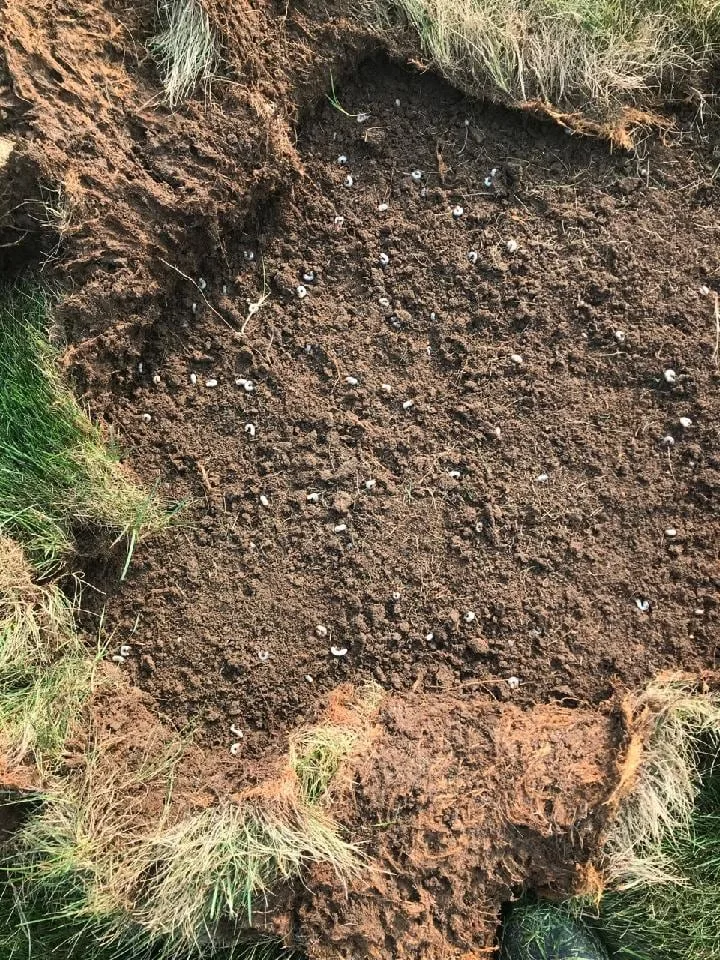
Grubs are the white, C-shaped larvae of beetles such as Japanese beetles and June bugs. They live in the soil and feed on grass roots. Adults lay eggs in midsummer. Larvae grow through late summer and fall, go through winter in the soil, then resume activity in spring before emerging as beetles.
That life cycle matters for timing. A preventative treatment in early summer aims to stop young grubs before they get large enough to tear up a lawn. A curative treatment later in the season targets grubs that are already feeding. Portage’s grub control page walks through both options.
Signs that point to grubs
Look for more than one clue before assuming every brown spot is insects:
- Irregular dead or dying patches that do not green up after watering
- Turf that feels spongy underfoot
- Grass that peels back like carpet because the roots are gone
- Skunks, raccoons, or birds digging in the same areas
- Adult Japanese beetles earlier in the summer on the same property
A simple lift test helps. At the edge of a suspect patch, tug gently on the turf. Healthy grass resists. Grub-damaged turf often lifts with little effort and shows loose soil underneath, sometimes with white larvae visible.
These are clues, not a lab diagnosis. Compaction, poor watering coverage, and disease can look similar from the street. If you are unsure, a technician visit is more useful than treating the whole yard on a guess.
What grubs are not
Heat and dry weather make cool-season lawns go dormant. That often starts as a uniform tan in sunny open areas and improves after a solid watering cycle. Our mid-July note on dormant versus dying grass covers that distinction.
Worn paths to the shed, gate, or patio usually track foot traffic and compacted clay, not insects. Thin strips along those routes need culture and sometimes aeration, not a blanket insecticide.
Chinch bugs feed on blades in hot, sunny zones and leave expanding yellow-to-brown patches. Grubs feed below the surface and make turf peel. Mole ridges are a different story again — moles hunt insects underground, including grubs, but mole and vole management is not the same as a grub treatment. Digging from skunks or birds over spongy turf often points down toward larvae first.
Separating those problems keeps you from watering a grub issue, treating drought like insects, or chasing moles when the food source is still in the lawn.
Why Northeast Ohio lawns get hit
Cool-season grass around Ravenna, Kent, Hudson, Stow, and nearby towns grows hard in spring and fall, then stresses in summer heat. Clay soils hold moisture unevenly. Thin, stressed turf shows root damage faster than a thick stand.
Grubs can feed for weeks while the canopy still looks acceptable. Heat, drought, or heavy traffic then exposes the weak spots all at once. That is why damage often seems sudden in late July through early fall even though the insects have been working underground.
Planning belongs on the calendar when a property has a history of grubs, predator digging, or confirmed lift tests — not every time a walkway edge browns out. Local notes like our late May insect pressure guide and peak summer grub signs are useful companions when you are deciding what to watch for next.
Prevention versus curative treatment
Portage offers both approaches, timed to what is happening in the lawn:
Preventative (typically June–July). Applied before eggs hatch and young grubs start heavy feeding. This is usually the cleaner, more economical path when a property has a real grub history or high risk. One well-timed application can protect a lawn for the season.
Curative (typically August–October). Targets grubs that are already large enough to cause damage you can see or feel. Useful when damage is active now and prevention was missed or not enough.
Spring. Sometimes used for grubs that overwintered, though it is less common than summer prevention or late-summer curative work.
Product choice and exact timing depend on inspection, season, and property history. Homeowners who want the service overview should start with grub control and ask during a quote request what fits their yard.
After treatment: watering and recovery
Treatment alone does not rebuild missing grass. After an application, watering helps move product into the root zone where grubs feed. Follow the post-treatment instructions from the visit — light, timely water matters more than flooding the yard once and forgetting it. How to water your lawn covers the slow, deep rhythm that also supports recovery.
Where roots were heavily damaged, thin areas may need seeding or overseeding once temperatures and soil conditions favor establishment. Core aeration helps on compacted clay before seed work. Balanced fertilization supports new growth after the insect pressure is under control. A soil test can explain why some spots stay pale even after roots recover.
Mowing height still matters during recovery. Taller cool-season turf shades soil and puts less stress on weak crowns. See proper mowing height if summer cutting habits have been aggressive.
How grub control fits a full lawn program
Grub work works best next to the rest of the lawn plan, not instead of it. Many Portage programs already include monitoring and, depending on the package, grub control alongside fertilization and weed control. Bundles on the homepage and specials page show how lawn and pest services can stack when a property needs more than one kind of help.
If wildlife digging is tearing the same corners every night, address the grub food source and ask whether mole and vole work belongs in the plan. If summer brown patches keep returning in sunny zones with firm turf that does not peel, look at watering and other insects before defaulting to grubs every year.
When to call Portage
Call if you see carpet-like peeling, repeated predator digging, or brown patches that ignore watering — especially if the same zones failed last year. Photos of the damage, notes about when it appeared, and whether the turf lifts help the visit go faster.
Portage Turf & Pest is based at 5615 South Prospect Street in Ravenna and serves communities across Northeast Ohio. Browse service areas, read the full grub control service page, or request a quote. You can also call (330) 296-8873.