
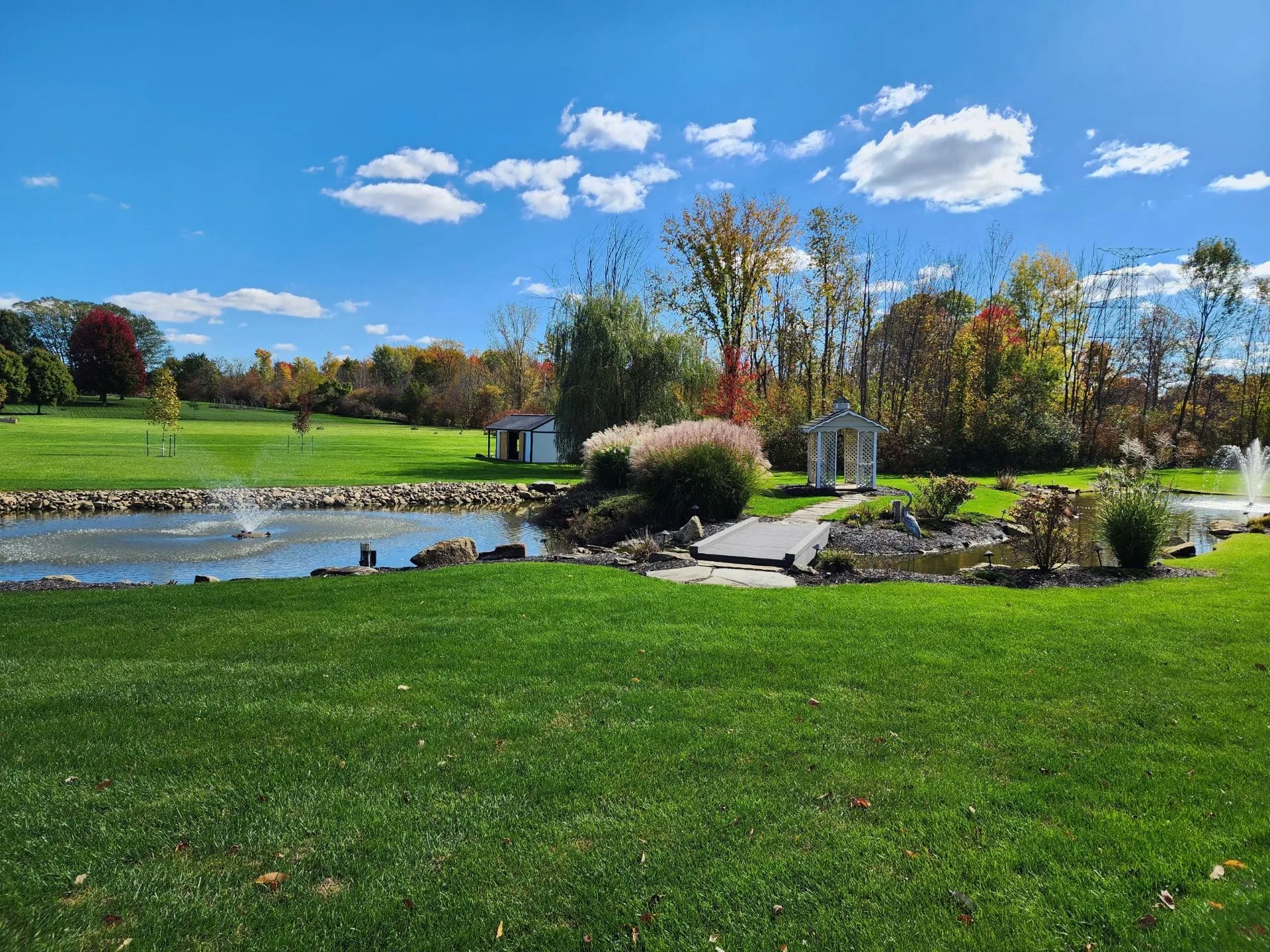
Hudson sits where tidy subdivisions meet wood lines and creek bottoms that hold humidity longer than open farmland. Tall fescue and bluegrass blends can look ready from the driveway while clay packs along paths kids use every afternoon.
National lawn blogs miss the way lake-effect rains and sudden heat stack stress on the same Ohio lot in one week. Portage Turf & Pest builds lawn care and pest control plans for real properties across Summit County, including Hudson, Stow, and Kent.
Start with soil testing on Northeast Ohio clay
Clay holds water once it enters but repels spray on packed paths. Test pH and nutrients before buying four bags on guesswork. Hudson lots with heavy tree cover often need lime discussion while sunny areas need different feed rates entirely.
Pair test results with our spring fertilization guide and structured fertilization programs so applications match growth when roots can absorb nutrients on wet profiles.
Ask about soil test and boosters when pH and compaction show up together.
Mowing and watering rhythm for tall fescue
Cool-season blends thrive near a 3-inch cut through humid weeks if blades stay sharp. Mow often enough to avoid removing more than one-third of the leaf. Wet clay ruts if you mow soggy side yards after lake-effect storms.
Review how to water your lawn and proper mowing height before blaming pests for brown fence lines that trace to coverage gaps.
Our proper mowing and more page covers seasonal habits for Northeast Ohio homeowners.
Grub planning on the Northeast Ohio calendar
Japanese beetle grubs damage roots while grass still looks green until late-summer stress exposes them. Plan grub control when history or lift tests support it — not on every tan patch beside walks.
Skunk dig marks and spongy turf underfoot are field clues worth photographing. Read our late May insect pressure article for timing Hudson shares with Ravenna and Streetsboro.
Fence-line insects and perimeter traffic
Tall grass at chain link invites ticks and exposes thin turf to summer foot traffic. Trim vertical edges where the mower deck cannot reach. Mosquitoes stage in the same humid bands at dusk.
Mosquito and tick control targets perimeter zones families use for play. Our tick smart yard edges checklist fits Hudson lots backing to woods near Hudson Springs Park.
Aeration on suburban clay
Annual or biennial core aeration on high-traffic paths keeps water and fertilizer reachable. Aeration works best when soil moisture is moderate — not baked dry mid-season.
Our soil compaction guide explains when plugs should break down naturally on Hudson side yards.
Integrated programs instead of juggling vendors
Ants, spiders, and perimeter invaders spike when mulch stays moist against foundations. Integrated pest control programs coordinate turf and perimeter so you are not juggling visits before a graduation party.
Bring soil tests, photos of fence lines, and daily traffic paths when you contact Portage Turf & Pest or call (330) 296-8873. Hudson lawns reward planning on Northeast Ohio clay more than panic products bought after the first brown area appears beside the gate.
Read why choose us for how we build programs around local conditions — not national templates.