
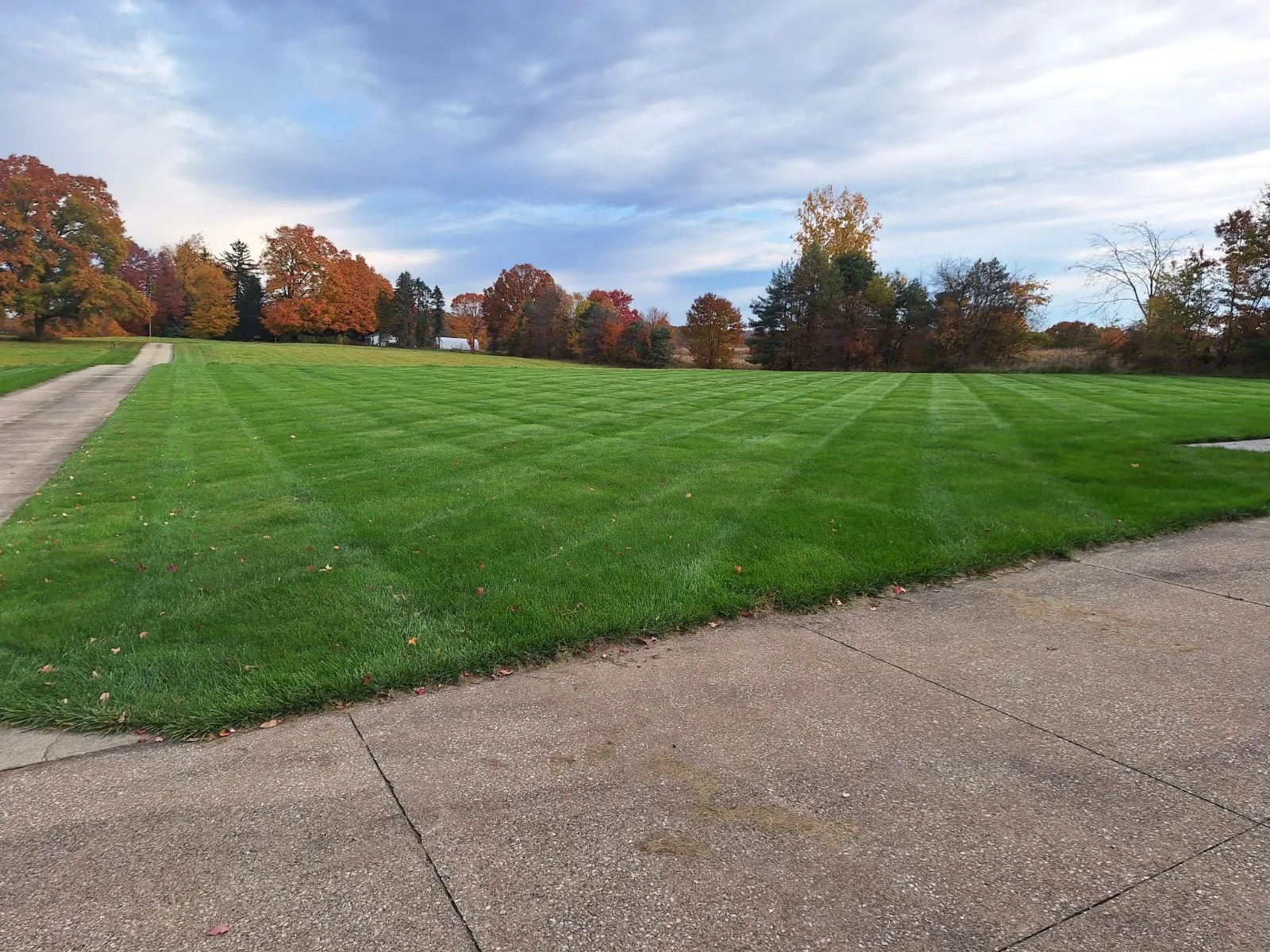
The first mow of spring is emotional. You finally hear the engine, smell fresh clippings, and declare winter over. April in Northeast Ohio still asks for restraint. Soil is often soft, dew hangs late, and blades that were fine enough last October now tear tissue instead of slicing it. Torn leaves lose water faster, invite fungal spotting during the next warm humid night, and make every other practice look worse than it is. This guide focuses on mechanical basics before you worry about stripe patterns. Pair it with proper mowing height and our April into May lawn rhythm article so height, timing, and fertility stay in one story across Ravenna, Hudson, Cuyahoga Falls, and nearby towns.
If your mower sat in an unheated shed, check tire pressure and oil per the manufacturer. This page stays on blades, grass, and soil contact. For program level timing around feeding and weeds, see spring fertilization and contact Portage Turf and Pest at (330) 296-8873 when you want help tied to your lot on areas.
Sharpen or replace before the first stripe
A dull blade whispers through May and screams in July. April is cheaper insurance. If you sharpen at home, follow the angle guides for your blade type. If you use a shop, ask for a fresh edge on both blades of a two blade deck. Balance matters; an unbalanced blade vibrates bearings over time and leaves a wavy cut you will blame on fertilizer later.
While you are under the deck, scrape old clippings that hold moisture against the shell. That five minute habit reduces the odd clump row that smothers young tillers after a wet week. If you prefer not to own the maintenance, our proper mowing and more page explains how we think about height handoffs through spring. Either way, the first pass should leave a clean slice you can see on a single leaf, not a frayed fringe.
Timing cuts around soil moisture
If footprints leave shine on the turf, wait. Rolling tires on saturated clay compacts pore space where roots need air. Aim for mid afternoon when dew has lifted and the top inch has dried enough that you are not sinking at every step. If a cold front keeps nights wet, shift the calendar, not the soil. The same patience we describe in soggy lawn after snow melt still applies when April rains sit on slow infiltration.
Slopes beside driveways dry faster than low shade in Kent or Streetsboro. Mow dry sections first and leave damp pockets for another day instead of forcing one heroic pass across the whole lawn. Ruts you cut in April often show as thin stripes all summer because compaction and crown damage compound quietly. When low spots never dry, read April lawn low spots after rains before you assume mowing alone will fix the look.
Height and frequency in April
Taller cool season turf handles April swings better than a scalped carpet. If you dropped the deck last summer for a tight look, bring it back up for spring recovery. Remove no more than one third of the leaf at a time, even if that means mowing twice in a week when growth jumps toward May. Alternate directions when you can so wheels are not wearing the same rut while the ground is soft.
If you bag, empty before the chute plugs; if you mulch, watch for clumps that shade the crown. Fast growth weeks are previewed in late April when lawn growth outpaces mowing; treat April cuts as practice for that cadence instead of as a one and done weekend task. Height and sharpness together do more for color than an early feeding pass on torn leaves.
How mowing lines up with professional visits
Customers on a lawn care program sometimes ask whether to mow the day before a visit or the day after. Honest answer: follow label and technician guidance for the product in play, and always share if you treated on your own between visits. Consistency beats surprises. If thin areas worry you, hold aggressive double cutting until you talk about seeding windows. Mechanical stress on weak stands is a quiet cause of summer bare patches along gates and grill paths.
Spring visits on fertilization are timed to growth and label requirements, not to when the neighbor fires up a mower. Tell us if your schedule only allows weekend mowing so we can set expectations for stripe quality between visits. Where aeration is on the radar, soft spring soil is a reason to plan timing with a professional read rather than with a rental trailer on the first dry Saturday.
Disease pressure starts at the cut edge
Cool humid nights after a warm April day favor leaf spots on tissue that was torn instead of cut. You cannot mow your way out of every fungus, yet clean mechanical entry matters as much as any fungicide conversation. Keep blades sharp through May, vary paths, and avoid evening mowing when dew is already forming. If tan patches persist in the same arc after good habits, photograph before and after rain so a technician can separate traffic wear from infection. Pet circles and shortcut mud from winter show up faster once everything else greens. For repair thinking, keep fix worn traffic paths in your lawn open when you map where the mower cannot fix compaction. Mowing supports those plans; it does not replace them.
Northeast Ohio springs also reward consistency over heroics. One perfect cut after three weeks of neglect still removes too much leaf. Steady height through April trains the stand for the growth jump that arrives in late April and May, when many homeowners discover the calendar was written for a different climate.
Before you start the engine this season
Run through blade condition, deck cleanliness, tire pressure, and a realistic read on soil firmness. Set deck height for spring recovery, not last August vanity. Photograph any odd tan patches before you mow them smooth so you have a record if they spread. Clean April cuts support everything else we do through the season. When you want a second set of eyes on traffic patterns or mower habits in Ravenna, Stow, or surrounding Portage County towns, Portage Turf and Pest is ready to help. Read why choose us for how we fit mowing into wider seasonal work, then contact us with your mower height guess and any photos of ruts or thin gate paths.
Mulching, bagging, and spring clumps
Mulching can work in April when blades are sharp and you are not removing more than one third of the leaf. Watch for clumps that shade the crown after a wet week; a quick second pass or light dispersion with a blower beats leaving wet mats on cool soil. Bagging is fine when growth is uneven or when disease history makes you cautious about returning clippings to the same arc.
Either choice is less important than timing on firm soil. A bagged cut on a dry afternoon beats a mulched cut through shine and ruts. As May approaches, revisit April into May lawn rhythm so mowing cadence keeps pace when growth doubles without warning.