
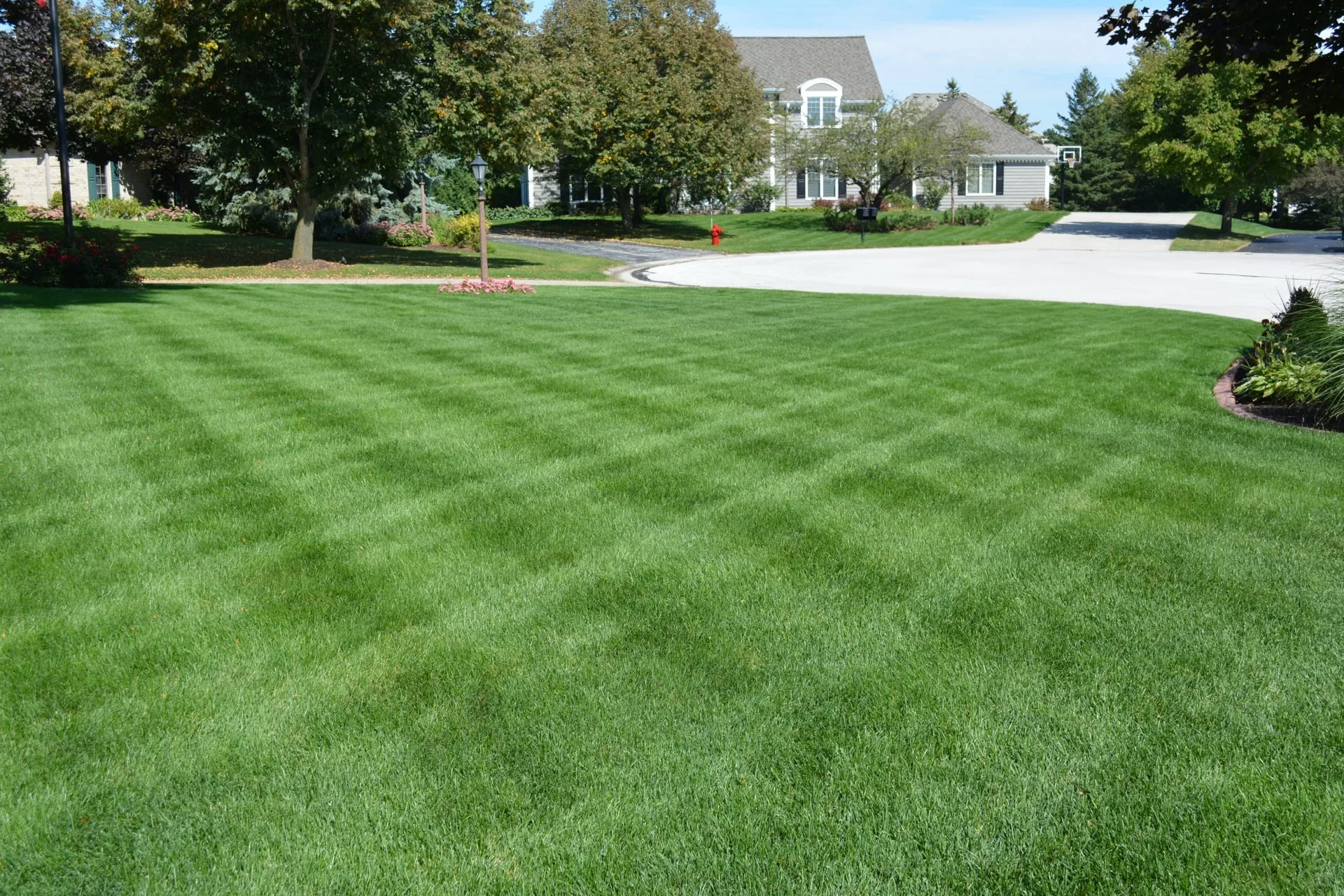
You meant to mow Sunday. Rain moved it to Tuesday. By Wednesday the stripes already look shaggy along the sunny front and the side yard reads taller than you intended. Late April and early May in Northeast Ohio are not subtle. Cool season grass finally has warm nights, steady soil moisture, and long enough days to push growth faster than many calendars allow. That is good news for roots and bad news for anyone who still thinks once a week is always enough from Ravenna through Kent, Hudson, Stow, Twinsburg, and the wider service footprint on areas.
Portage Turf and Pest works with busy households every spring. This article is not a lecture about perfection. It is a grounded read on why growth jumps now, how mowing ties to everything else you are doing for the lawn, and when it makes sense to bring in lawn care help so visits line up with growth instead of with guilt.
Why the calendar feels broken in late April
Growth rate is a mix of temperature, rainfall, nitrogen already on the lawn, and how much leaf you left in place last cut. Remove too much at once and the plant panics. Wait too long and you remove too much at the next cut anyway. Our proper mowing height piece is still the best short reference for the one third rule and for why taller cool season turf handles stress better than a tight summer golf look in May.
If you are already on a fertilization program, spring visits are timed to label guidance and to how your grass is actually growing, not to a meme on the internet. Tell us if your schedule only allows weekend mowing so we can set expectations for stripe quality between visits. Pair mechanical habits with April first mow blade sharpness so fast growth weeks do not turn into torn tips that look like disease from the curb.
Water quietly drives the speedometer
Spring rains often carry you through April. When nights stabilize and days warm, evapotranspiration climbs and growth follows. If you irrigate, shift toward the deeper, less frequent rhythm in how to water your lawn instead of nightly sprinkles that keep tissue soft and easy to tear when you finally run the mower. Soft growth plus dull blades equals white tips that invite questions about fungus when the real story is mechanical.
Low spots that stay wet can green fast while the rest of the lot looks normal, which makes the schedule feel even more unfair. If puddles return in the same bowl, read April lawn low spots after rains before you blame the mower alone. Moisture and growth share a speedometer in clay country.
Traffic lanes show up faster when growth is fast
The dog path, the gate mud strip, and the line to the grill were always there. They simply hide less when everything else is tall around them. For repair thinking, keep fix worn traffic paths in your lawn open when you plan summer traffic. Heavy May weekends add feet without adding hours in your week. Planning aeration or seeding may belong in the conversation if compaction is part of the story, not only height.
Our April into May lawn rhythm guide anchors the wider seasonal habits: vary mower paths when soil is still soft, scan for weeds while growth is fast, and hold aggressive foot traffic on spongy corners. Growth that outpaces mowing is also growth that outpaces recovery on beaten paths if you ignore wear.
Pests and parties share the same month
Growth is not the only May pressure. If you are lining up outdoor evenings, read tick smart yard edges and ask about mosquito and tick programs before you assume the mower fixes every worry. Turf health and perimeter comfort often move together, but they are not the same service. Tall grass along a fence line can hide litter and harbor ticks while the open lawn looks fine.
When several worries fire at once, our May gathering lawn priority quiz can sort color, wear, and biting pests without pretending one answer fits every lot. Use it as a starting direction, then return here for the growth and mowing lens.
Building a mowing rhythm that survives May
Pick two weekdays that can flex for mowing, not only Saturday. If neither works, ask how professional lawn care support fits your property. We would rather hear an honest calendar than watch a lawn go to seed because you waited too long to ask. Twice-weekly cuts for a short window beat one deep scalp that exposes crowns before heat arrives.
Alternate directions when you can. Raise the deck if you dropped it last year for aesthetics. Photograph thin arcs before you mow them smooth so you have a record if they persist. If you are comparing program work with retail bags, read spring fertilization guide so feeding expectations match how fast Ohio turf actually grows in late spring.
When to call Portage Turf and Pest
When growth outpaces you for more than a single busy week, contact Portage Turf and Pest with your address, sun versus shade split, and whether kids, dogs, or events concentrate traffic. Call (330) 296-8873 with mower height guesses and photos of ruts if soft soil is part of the story. We help Northeast Ohio lawns stay on a steady arc through May without promising a magazine cover on a timeline physics will not allow.
Read why choose us for how we stack seasonal work, and glance at May early moisture and mow signals when warm days hide wet nights. Late April growth is a sign the lawn is waking well. Your job is to match mechanics to that wake up so summer arrives with fewer surprises.
Seedheads, clumps, and the look you did not plan
When growth jumps, cool season turf may throw seedheads that make the lawn look rough even when it is healthy. That is biology, not neglect. Steady mowing on a reasonable schedule usually settles the look without scalping. If you let the lawn go an extra week because rain stacked on a busy calendar, the next cut may need two passes: first at a higher setting to knock height down, then a few days later at target height, still respecting the one third rule.
Clumped clippings after a wet week shade crowns and invite questions about fungus. Sharp blades and firm soil reduce both problems. If stripes look wavy only near the gate, suspect ruts and compaction before you buy another product. Growth that outpaces mowing is manageable when you treat it as a short season rhythm, not as a single failure to keep up.
Talking to us with an honest calendar
We are not here to shame anyone who travels for work or shares one mower across three family lots. Tell us how often you can realistically cut in late April and May, whether you bag or mulch, and whether soft soil limits which days are safe. That honesty lets us align fertilization visits and expectations with growth instead of with an ideal schedule none of us live on.
Photos of height before and after rain, and of any thin lane beside the grill, help more than a promise to “catch up this weekend.” Late April is busy for everyone in Northeast Ohio; matching the lawn’s pace beats fighting it for another year.