
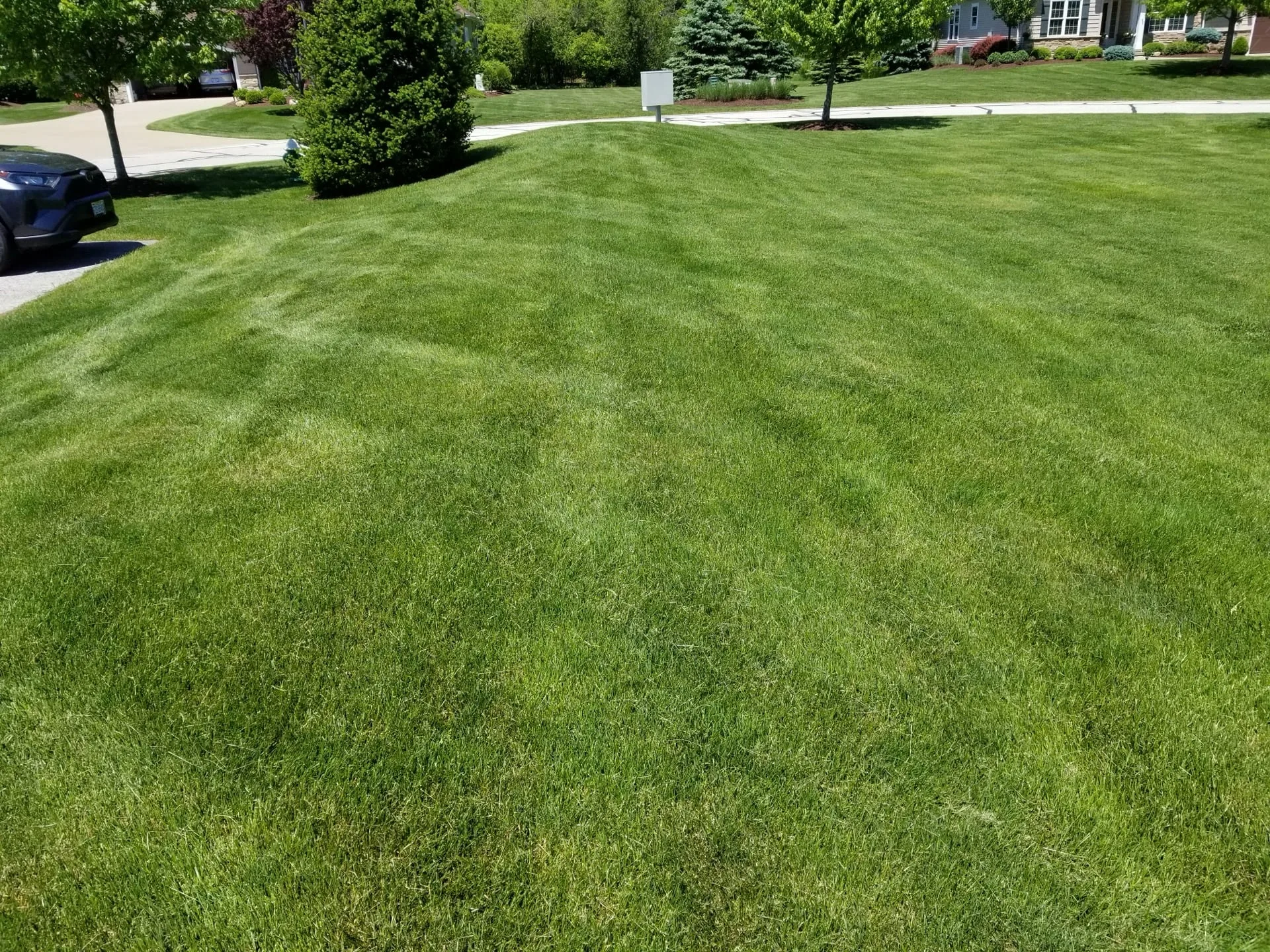
You can feel April in the air before your soil agrees. Sunny strips near the driveway may look ready while shaded back corners still feel cold through the sole of your shoe. That split personality is normal around Ravenna, Stow, Hudson, and the rest of Northeast Ohio, where clay, shade, and late snow piles all nudge the calendar in different directions on the same street. This article is about reading soil warmth and grass response before you stack products or push growth faster than roots can support. It sits beside our spring lawn cleanup checklist and the broader spring fertilization guide, but it narrows to the moment when homeowners ask whether April is finally safe for the first serious pass on an organic lawn program.
Nothing here replaces a site visit. Soil tests, shade maps, and pet traffic still matter. Use the ideas as a conversation starter with your own notes, then contact Portage Turf and Pest or call (330) 296-8873 when you want programs aligned to your address and goals across the communities on areas.
Why warmth beats the calendar alone
Cool season turf roots absorb nutrients best when soil is awake enough for steady biological activity. A warm week of air temperatures does not always mean four inches down has moved. Low spots that held frost, tree lines that see little March sun, and north facing slopes can lag by two weeks or more compared with a full sun front yard in Kent or Twinsburg. Walking the lawn with a soil thermometer is nerdy yet useful. Writing three temperatures on a simple diagram helps you remember which zones need patience when you compare notes with a technician later.
If winter left compaction or puddling, warmth also arrives unevenly. Our notes on soggy lawn after snow melt still apply when April rains sit on top of slow infiltration. Fixing drainage and easing compaction supports every feeding decision that follows, whether you choose conventional or organic inputs. Soil test and boosters often enter the same conversation because pH and organic matter change how quickly biology wakes up in clay.
What ready looks like in the grass itself
Color is a clue, not the whole story. Look for even greening in the crown area, new leaves standing upright, and footprints that bounce back within a day on dry afternoons. If grass still looks matted, gray green, or easy to tear when you tug gently, give the lawn another week of sun and wind before you ask it to carry extra fertility. That patience matches what we describe in early spring when to fertilize: plant readiness matters more than a date on a bag.
Mowing matters too. If you have not refreshed proper mowing height habits yet, do that before you chase color with product alone. A clean cut at the right height supports photosynthesis more than a shallow spike of dark green that fades when heat arrives. April organic work is about pairing feeding with mechanical habits that keep leaves intact, not about forcing a magazine cover before Memorial Day.
How organic programs layer into April
Organic programs lean on biology that needs contact, moisture, and time. That is a strength in the long arc of the season and a reason not to rush the first heavy pass on cold ground. Professionals time applications to label guidance, growth windows, and what else is happening on the lawn, such as seeding prep or aeration conversations for late spring. If you are comparing a single product purchase to a full season plan, read how we describe lawn care programs and fertilization together so you see how weed timing and density goals fit the same calendar.
April is often a calibration month: confirm baselines, address obvious weeds with a plan instead of a panic spray, and line up May work before outdoor calendars fill. Our April into May lawn rhythm guide helps you keep mowing and water habits steady while organic visits stack in the background. Organic does not mean slow in every sense; it means the lawn sets the pace, not the shipping date on a pallet.
Shade, slope, and the microclimates on one lot
A property in Cuyahoga Falls or Fairlawn can hold four microclimates without trying. The strip along the foundation stays cool. The south facing bank greens first. The dog path compacts every spring thaw. Organic matter and microbial activity follow those patterns, so one blanket application date rarely fits every zone. Photograph thin areas beside pavement, tree drip lines, and pet routes so you remember patterns in July when everything looks uniformly green from the street.
Where moss or algae return in the same pocket year after year, light and moisture are driving the story. Scraping surface growth without changing grade or airflow buys a short reprieve. Tie those observations to soil compaction and core aeration when traffic and clay repeat the same thin lane. Organic programs perform better when water is not sitting on leaves overnight after application, so tell your technician where puddling happens after real rains.
Pairing organic turf with the rest of the yard plan
Organic lawn care is one line on a property that may also need grub planning, perimeter comfort, or plant health work on shrubs that flowered weakly. None of that cancels organic turf; it simply needs honest sequencing. Grub preventative timing in Ohio follows insect life cycles, not whenever brown patches appear. Waiting for obvious damage often means more repair work in fall, whether your feeding style is organic or conventional.
If outdoor evenings already mean swatting along the wood line, read tick smart yard edges and ask about mosquito and tick programs as a separate conversation from turf nutrition. Turf health and perimeter comfort often move together, but they are not the same service.
When to bring in Portage Turf and Pest
Call when color is uneven beyond what shade explains, when crust or moss keeps returning on the same strip, or when you want organic care but are unsure how to pair it with summer stress and fall recovery. We serve homeowners across the communities listed on areas and we build plans around real Ohio springs, not a national template copied from warmer states.
Bring any recent soil data, photos of low spots after rain, and a plain language list of what bothered you last July. For the bigger picture on how we work season to season, read why choose us if you suspect you need stacked work such as seeding after moisture calms.
April patience is not procrastination. It is how strong lawns earn summer without drama, and how organic programs earn trust by matching biology instead of marketing calendars. When you are ready for a plan built around your property, contact Portage Turf and Pest with your zone notes and we will align visits to real Ohio springs rather than a national template.
What to write down before you call
A short list beats a long apology for waiting. Note which zones greened first, where water sat after the last inch of rain, and whether last summer’s trouble was color, weeds, thin traffic lanes, or something else entirely. If you treated on your own between seasons, include product type and approximate date so we do not stack incompatible work. Photos in morning light after rain and again after three dry days tell us more than a single close up of one blade.
Organic care rewards homeowners who treat the lawn as a system: mowing height, moisture, compaction, shade, and feeding all speak at once in April. Getting those signals on paper helps us match the first visit to your lot instead of to a generic spring postcard.